PPR Fittings Provide Long Lasting Durability
Nov 19, 2026

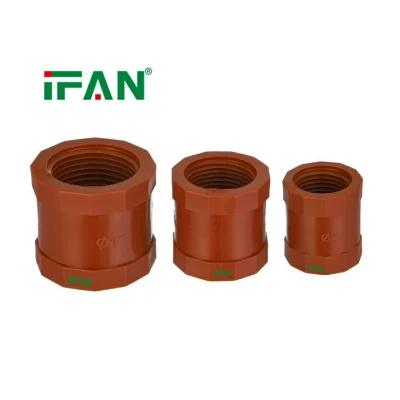
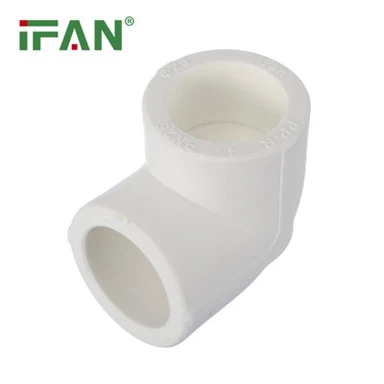
| Product Name | PPR Pipe Fittings |
| Size | 20-63mm Or Customized |
| Color |
Green,White,Blue Or Customized |
| Package | IFAN standard packaging |
| Connection | welding |
| Sample | Sample Free |
| Contact |
Welcome to contact IFAN, we are online 24 hours a day to answer your questions!
Material Composition and Structural Stability
The service life of a plumbing system depends heavily on the materials used in its construction. Pipes and fittings are continuously exposed to water pressure, temperature fluctuations, and various environmental conditions. PPR fittings are manufactured from polypropylene random copolymer, a thermoplastic material developed for applications requiring consistent mechanical properties and resistance to common water distribution conditions.
The molecular structure of PPR provides a combination of flexibility and structural strength. Unlike certain rigid materials, it can accommodate limited dimensional changes without immediately developing brittle behavior under suitable operating conditions. This characteristic is particularly relevant in plumbing networks where water temperature changes regularly.
The material formulation also influences the fitting's resistance to mechanical stress, chemical exposure, and gradual material deterioration. Manufacturers must select appropriate polymer grades and maintain consistent processing conditions to produce fittings that meet the required service specifications. The actual service life depends on the complete operating environment, including pressure, temperature, installation quality, and water chemistry.
Resistance to Corrosion and Chemical Deterioration
One important characteristic of PPR fittings is their resistance to conventional metallic corrosion. Metal components exposed to water and oxygen may undergo chemical or electrochemical reactions, potentially resulting in rust formation, surface deterioration, or changes in internal dimensions.
PPR fittings have a nonmetallic structure and do not produce iron oxide through ordinary water contact. This makes them suitable for many water transportation systems where corrosion-related deterioration is a consideration.
Their chemical resistance also makes them compatible with numerous common aqueous environments. Nevertheless, compatibility is not unlimited. Strong oxidizing agents, certain chemicals, high concentrations, and prolonged exposure may affect polymer materials.
For long-term applications, the transported medium should be evaluated against the manufacturer's chemical resistance information. Selecting the correct material specification helps prevent premature deterioration caused by unsuitable chemical exposure.
Resistance to Repeated Temperature Changes
Temperature fluctuations are common in plumbing systems, particularly those supplying hot water or connecting to heating equipment. PPR fittings may experience repeated expansion and contraction as water temperatures change during daily operation.
The polymer structure allows the material to accommodate certain dimensional changes within its specified operating range. However, repeated thermal exposure can influence mechanical properties over time, making correct product selection important.
In hot water installations, the allowable working pressure generally decreases as operating temperature increases. Therefore, a fitting's nominal pressure classification should not be considered separately from its temperature rating.
Engineers should refer to manufacturer pressure-temperature charts and expected operating conditions when selecting components. Suitable expansion arrangements, pipe supports, and installation clearances should also be included in the pipeline design to control mechanical stress around connection points.
Mechanical Strength Under Continuous Water Pressure
PPR fittings must maintain their structural condition while exposed to internal water pressure. The pressure produces forces along the fitting walls and at the connections between individual pipeline sections.
The ability to withstand these forces depends on the polymer grade, wall thickness, fitting geometry, and manufacturing precision. Different fitting configurations may experience different loading conditions. For example, elbows change the direction of the pipeline, while tees divide water into separate branches.
A fitting selected for an unsuitable pressure class may experience excessive deformation or gradual material stress during operation. This is particularly important in systems with pumps, pressure fluctuations, or elevated operating temperatures.
Proper hydraulic calculations and product specification checks help ensure that the selected fittings remain within their permitted working conditions. Pressure surges should also be considered when designing the complete network.
Heat Fusion Quality and Joint Integrity
The connection method has a significant influence on the long-term structural condition of PPR fittings. Most PPR systems use socket heat fusion to connect fittings with compatible pipes.
During this process, the external surface of the pipe and the internal surface of the fitting socket are heated using specialized equipment. The softened surfaces are then joined and allowed to cool, forming an integrated thermoplastic connection.
A correctly completed fusion joint provides a continuous connection without relying on a separate gasket at the fused interface. However, the quality of the joint depends on accurate heating temperature, heating duration, insertion depth, and cooling time.
Incorrect procedures may create incomplete fusion, excessive internal material displacement, or uneven connection geometry. These defects can influence the mechanical behavior of the joint during long-term operation.
Using suitable fusion equipment and following the manufacturer's installation instructions are essential steps in maintaining connection integrity.
Manufacturing Precision and Product Consistency
The durability of PPR fittings begins with manufacturing quality. Even when the correct raw material is selected, inconsistent molding conditions may produce differences in wall thickness, socket dimensions, or internal geometry.
Injection molding parameters must be carefully controlled to maintain consistent component dimensions. Mold temperature, material flow, cooling time, and processing conditions all influence the finished product.
Quality control procedures should include dimensional measurements, visual inspection, material verification, and appropriate mechanical testing. Manufacturers may also conduct pressure-related tests according to relevant product standards.
For purchasing managers and contractors, checking technical documentation is an important part of product selection. Certificates, pressure classifications, and manufacturing specifications provide useful information about the intended application and product quality.
Environmental Conditions and Installation Location
External environmental conditions can influence the service life of PPR fittings. Although these products are commonly installed inside buildings or protected pipeline spaces, some projects may expose them to sunlight, outdoor temperatures, or mechanical impacts.
Prolonged ultraviolet exposure can affect polypropylene materials. Where fittings are installed outdoors, suitable protection or products specifically designed for the environmental conditions should be considered.
Installation location also matters. Fittings positioned near machinery may experience vibration, while components installed in crowded service areas may be exposed to accidental impact.
Protective arrangements, appropriate supports, and sufficient installation clearance help control these external influences. Designers should also avoid placing fittings in locations where continuous mechanical loading is transferred from other equipment.
Regular Inspection and Maintenance
Long-term performance does not eliminate the need for inspection. Periodic examination allows maintenance personnel to identify visible changes before they develop into more serious problems.
Inspections may include checking the fitting body for deformation, examining fusion joints for leakage, and observing whether connected pipes remain properly supported. In hot water systems, operating temperature and pressure should also be reviewed periodically.
Where fittings are installed in concealed locations, inspection openings and accurate pipeline drawings can make future maintenance more manageable. Any component showing unusual deformation or repeated leakage should be assessed by qualified personnel.
Maintenance procedures should follow manufacturer recommendations and relevant plumbing standards. Operating records can also help identify recurring pressure or temperature conditions that may affect the pipeline.