
Modern Buildings Prefer PPR Pipe Fittings
Jun 30, 2026

Rising Expectations for Plumbing Systems
The construction industry has changed significantly over the past decade. Today's residential towers, office buildings, hotels, and public facilities are expected to provide reliable infrastructure that can perform efficiently for many years. Plumbing systems are a vital part of that infrastructure, making the selection of pipe materials more important than ever. Developers and contractors are increasingly turning to PPR pipe fittings because they offer an effective balance between durability, safety, and installation efficiency. As projects become more focused on long-term performance rather than short-term cost, PPR fittings continue to gain recognition as a dependable solution for modern building applications.
Designed for Long-Term Performance
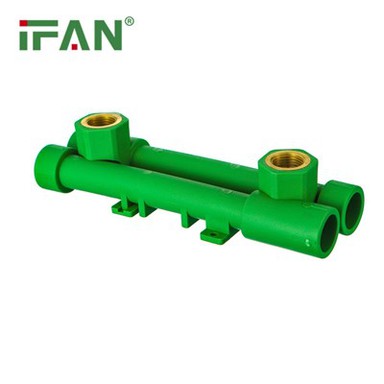
One of the main reasons modern buildings prefer PPR pipe fittings is their ability to maintain stable performance over an extended service life. Manufactured from polypropylene random copolymer, these fittings are engineered to resist corrosion, scaling, and chemical reactions that often affect traditional metal piping. Their smooth internal surface allows water to flow efficiently while reducing the buildup of mineral deposits. Even after years of continuous operation, the material maintains its structural strength and hydraulic performance. This durability helps reduce maintenance requirements and minimizes the risk of unexpected system failures, making PPR fittings a practical investment for building owners.
Suitable for Hot and Cold Water Applications
Modern plumbing systems must handle different operating conditions throughout the day. Hot water supply, cold water distribution, and circulation systems all place varying demands on piping materials. PPR pipe fittings are designed to operate effectively across a wide temperature range, making them suitable for both domestic and commercial water supply systems. They can withstand continuous pressure while maintaining reliable sealing performance. This versatility allows engineers to use the same material throughout multiple sections of a project, simplifying system design and reducing compatibility concerns during installation and future maintenance.
Faster Installation Improves Project Efficiency
Construction schedules are becoming increasingly demanding, requiring materials that can be installed quickly without compromising quality. PPR pipe fittings support efficient construction through their heat fusion joining method. During installation, the pipe and fitting are heated and fused into a single continuous connection rather than being joined with threads or adhesives. This process creates a strong and leak-resistant joint while reducing the number of components required. Contractors appreciate the straightforward installation procedure because it helps improve productivity, shorten project timelines, and lower labor costs. Reliable joints also reduce the likelihood of future repairs, adding further value throughout the building's operational life.
Better Hygiene for Water Supply Systems
Clean water delivery is an essential requirement in every modern building. Hospitals, schools, residential communities, and commercial properties all depend on plumbing systems that protect water quality from the source to the point of use. PPR pipe fittings are produced from non-toxic materials that do not easily react with drinking water under normal operating conditions. Their smooth inner walls reduce sediment accumulation and help maintain stable flow characteristics. These features contribute to cleaner water distribution while supporting hygienic plumbing systems that meet the expectations of today's construction standards.
Supporting Sustainable Construction
Environmental responsibility has become a key objective for architects, developers, and engineering firms. Building materials are increasingly evaluated not only for their technical performance but also for their environmental impact. PPR pipe fittings contribute to sustainable construction by offering a long service life that reduces replacement frequency and construction waste. Their leak-resistant fusion joints help conserve water by minimizing losses within the pipeline system. In addition, polypropylene materials can be recycled in appropriate facilities, supporting responsible resource management. These advantages align well with the growing emphasis on environmentally conscious building practices across global construction markets.
A Practical Choice for Future Projects
As the construction industry continues to adopt higher standards for quality, efficiency, and sustainability, PPR pipe fittings are becoming an increasingly common choice for modern buildings. Their combination of corrosion resistance, dependable performance, easy installation, and hygienic water transportation provides lasting value across a wide range of applications. Whether used in apartments, office complexes, healthcare facilities, educational institutions, or industrial buildings, PPR fittings help create plumbing systems that require less maintenance and deliver reliable performance for many years. For builders seeking durable and cost-effective piping solutions, PPR pipe fittings remain a smart option that supports both today's project requirements and tomorrow's infrastructure demands.