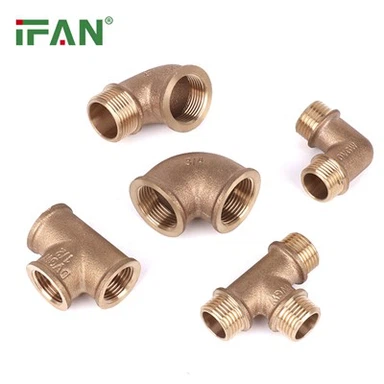


Bronze Threaded Fittings Support Water Distribution
Type:Bronze Threaded Fittings
Brand:IFAN
Connecting method:Thread
Applications:Water Systems
Color:Yellow
- Fast Delievery
- Quality Assurance
- 24/7 Customer Service
Product Introduction


| Product Name | IFAN Bronze Threaded Fittings |
| Size | 1/2"-1" Or Customized |
| Color |
Yellow Or Customized |
| Package | IFAN standard packaging |
| Features | Durable |
| Sample | Sample Free |
| Contact | Click HERE to contact us now! |
Welcome to contact IFAN, we are online 24 hours a day to answer your questions!
A Practical Role in Water Distribution Systems
Bronze threaded fittings play an important role in water distribution systems by connecting pipes, valves, meters, pumps, and other plumbing components. Their primary function is to create defined connection points that allow water to move from a main supply line toward different sections of a building or facility.
A water distribution network rarely consists of one continuous pipe. It usually contains changes in direction, branch lines, equipment connections, and transitions between different pipe sizes. Bronze threaded fittings provide specific connection configurations for these requirements, including elbows, tees, couplings, adapters, and other threaded components.
Because each fitting has a particular purpose, the plumbing layout can be organized around the actual path that water needs to follow. The fitting selection should correspond with pipe dimensions, thread specifications, pressure conditions, and the intended application.
Connecting Main and Branch Lines
Water distribution commonly begins with a main line that supplies several smaller branches. A bronze threaded tee can be used where the system needs to divide the flow into separate directions, provided the fitting is correctly sized and rated for the application.
For example, a main water line may enter a building and then supply separate branches for kitchens, bathrooms, utility rooms, or other areas. The fitting arrangement establishes the physical points where these branches leave the main route.
The direction and size of each branch should be determined during system design. A fitting should not simply be selected because it fits physically. The internal diameter, thread configuration, pressure rating, and flow requirements all need to correspond with the rest of the network.
Supporting Changes in Water Flow Direction
Water distribution routes often need to turn around walls, structural elements, equipment, or other obstacles. Bronze threaded elbows provide a defined method for changing the direction of a pipeline.
Different elbow configurations can accommodate common directional requirements. The selected fitting should match the pipe dimensions and the required connection type. Its orientation also needs to be considered before the connection is tightened.
Using a properly selected elbow makes the route easier to interpret during installation. Instead of modifying the pipe connection in an improvised manner, the installer can use a fitting designed for the intended directional change.
The number and placement of elbows should still be considered as part of the hydraulic layout because every change in direction affects the movement of water through the system.
Managing Different Pipe Sizes
A water distribution network may contain pipes with different diameters. Main supply lines often carry larger volumes, while branches serving individual fixtures may use smaller pipe sizes according to the design.
Bronze threaded reducers and adapters can provide controlled transitions between different connection sizes. The fitting establishes the intended change in diameter while maintaining a defined threaded interface.
Correct sizing is essential. A transition should be selected according to the actual pipe dimensions and thread specifications rather than by visual comparison. The designer should also consider flow requirements and pressure conditions when determining where a reduction should occur.
This allows different sections of the water network to be connected according to their specific distribution requirements.
Connecting Valves and Equipment
Water distribution systems frequently include valves, gauges, pumps, meters, filters, and other equipment. These components may use threaded connections that require an appropriate adapter or fitting to connect with the surrounding pipework.
Bronze threaded fittings can serve as transition points between the distribution pipe and these components. The connection provides a defined interface while allowing the equipment to be positioned according to the system layout.
The fitting and equipment connection must have matching thread specifications. Where different materials are joined, the complete connection should also be evaluated for compatibility with the water chemistry and operating conditions.
Properly planned equipment connections make it easier to establish a continuous route from the water source through the distribution network.
Maintaining an Organized Distribution Layout
A well-planned water system needs clearly defined routes. Bronze threaded fittings help establish these routes by creating predictable points for branching, turning, reducing, and connecting equipment.
Before installation, the position of each fitting should be considered in relation to the pipe route and the components around it. This is particularly important in compact service spaces where several lines may run close together.
The fitting orientation should also be planned before final tightening. Once a threaded connection has been assembled and sealed, forcing it into a different position may damage the threads or create unnecessary mechanical stress.
A logical layout makes the direction of water movement easier to understand and helps installers follow the original plumbing plan.
Threaded Connections in Water Service
The threaded connection is central to the way bronze fittings participate in water distribution. A correctly matched male and female thread creates the mechanical interface between the fitting and the connected component.
Thread standards, sizes, and profiles must be compatible. The threads should be clean and free from damage before assembly. An appropriate sealing method should then be used according to the fitting manufacturer's instructions and the requirements of the water service.
The fitting should be tightened using a controlled procedure. Excessive force can damage the thread, while insufficient engagement may prevent the connection from being assembled correctly.
These details are especially important when a distribution system contains many threaded joints because each connection contributes to the overall performance of the network.
Supporting Controlled Water Movement
The purpose of a distribution system is not merely to connect pipes but to direct water toward specific outlets under defined operating conditions. Fitting selection therefore needs to reflect the expected flow path.
Elbows change direction, tees divide routes, couplings connect sections, and reducers establish transitions between pipe sizes. Each component contributes to the geometry of the water pathway.
The hydraulic design should account for pipe length, diameter, pressure, elevation, valves, and fittings. Unnecessary changes in direction or poorly selected components can increase resistance within the network.
Bronze threaded fittings should therefore be considered as part of the complete hydraulic arrangement rather than as isolated connection pieces.
Inspection and Pressure Testing
After the distribution system has been assembled, the threaded fittings should be inspected before the pipework is concealed or placed into normal service. The installer can check thread engagement, fitting orientation, sealing, and visible signs of incorrect assembly.
Pressure testing should be completed according to applicable plumbing requirements and the manufacturer's instructions. Testing provides an opportunity to identify leakage or connection issues while the fittings remain accessible.
If a problem appears during testing, the cause should be identified before the system proceeds to normal operation. Possible causes may include incorrect thread matching, poor sealing, damaged components, or unsuitable assembly.
Bronze Fittings Within a Complete Water Network
Bronze threaded fittings support water distribution by providing defined connection points for branching, directional changes, size transitions, and equipment connections. Their role is closely connected with the overall arrangement of pipes, valves, and fixtures.
Effective water distribution requires more than selecting a particular fitting material. Pipe size, flow requirements, pressure, thread compatibility, fitting configuration, and installation procedure all need to work together.


Hot Tags: bronze threaded fittings support water distribution, China bronze threaded fittings support water distribution manufacturers, suppliers, factory, Bronze Fitting, Bronze Pipe Fitting, Bronze Plumbing Fitting