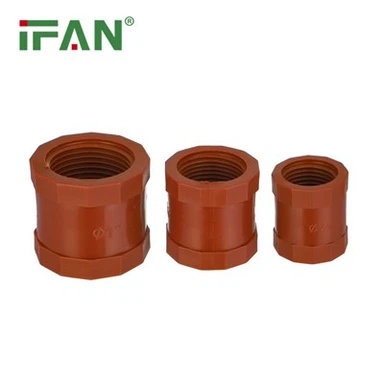
Connect Different Pipes with Brass Fittings
Aug 25, 2026


| Product Name | IFAN Brass Thread Fittings |
| Size | 1/2"-2" Or Customized |
| Color |
Yellow/White Or Customized |
| Package | IFAN standard packaging |
| Features | Durable |
| Sample | Sample Free |
| Contact | Click HERE to contact us now! |
Welcome to contact IFAN, we are online 24 hours a day to answer your questions!
Modern piping systems rarely depend on one pipe type alone. Renovation projects, equipment upgrades, and mixed-material installations often require connections between pipes with different sizes, materials, or connection methods. Brass fittings provide a practical way to create these transitions while keeping the overall system organized.
Their wide range of shapes and connection configurations allows installers to solve different joining requirements. From threaded adapters to reducers and transition connectors, brass fittings can bridge differences between piping components. The key is choosing a fitting that matches the physical and service requirements of both connected pipes.
Creating Reliable Pipe Transitions
Connecting different pipes requires more than finding two components that appear to fit together. Their diameters, connection standards, materials, and operating conditions must all be considered.
A suitable brass fitting acts as an intermediate connection point. One side can match the existing pipe, while the other side provides the appropriate connection for the new section.
This approach is particularly useful during renovations. Instead of replacing an entire pipeline, installers can retain suitable existing sections and connect them with new piping through properly selected brass fittings.
Connecting Different Pipe Materials
Residential and commercial systems may contain several pipe materials. Brass fittings can serve as transition components when the fitting design supports the specific combination.
For example, a brass adapter may provide a threaded connection between a metal component and another pipe system. The exact connection method depends on the pipe material and product design.
Material compatibility should always be checked before installation. Differences in corrosion behavior, temperature resistance, fluid chemistry, and joining methods can influence long-term performance.
Adapting Different Pipe Sizes
Pipe diameter changes are common in plumbing and fluid distribution systems. Equipment connections may use smaller ports, while main lines require larger pipe sizes.
Brass reducers and reducing adapters can provide a controlled transition between different diameters. This allows installers to change pipe size without creating an improvised connection.
The reduction should be selected according to the required flow and pressure conditions. An unnecessarily small opening can restrict flow and increase resistance within the system.
Using Threaded Brass Adapters
Threaded adapters are among the most convenient brass fittings for connecting different components. They can provide a transition between male and female threads or between different connection arrangements.
This makes them useful when existing piping uses a threaded connection but the replacement component has a different interface.
Before installation, the thread standards must be verified. Matching nominal sizes alone does not guarantee compatibility. Thread profile, diameter, and pitch all need to correspond correctly.
Joining Pipes During Renovation Projects
Renovation work often creates connection challenges because old and new piping must operate together. Existing pipes may use connection standards or materials that differ from newly installed components.
Brass fittings can simplify these transitions by providing adapters, couplings, and other intermediate connections.
This can reduce the need to remove large sections of functioning pipe. It also gives installers more flexibility when upgrading selected parts of an existing plumbing network.
However, the condition of the existing pipe should be evaluated first. A fitting cannot compensate for a damaged or unsuitable pipe section.
Connecting Pipes to Equipment
Pipes frequently need to connect with pumps, heaters, filters, meters, valves, and other equipment. These devices may use connection sizes that differ from the surrounding pipeline.
Brass adapters can bridge these differences when the fitting has the appropriate specifications. An installer can select the connection configuration that matches both the equipment port and the pipe.
This approach can simplify equipment installation and future replacement. It also reduces the need for custom modifications around standard components.
Supporting Organized Pipe Layouts
Different pipe connections can make a system complicated if installers rely on excessive bends or improvised transitions. Properly selected brass fittings can help create cleaner routes.
Elbows can redirect a pipe, tees can create branches, and couplings can join straight sections. Combining these configurations allows installers to design around walls, equipment, and structural obstacles.
A well-organized layout can make inspection and maintenance easier. It may also reduce unnecessary pipe length and avoid awkward connection points.
Sealing Different Connections Properly
A secure transition depends heavily on the sealing method. Threaded connections may require thread tape, sealant, or another approved sealing approach.
The sealing material must be compatible with the fluid, temperature, and connection type. Installers should also avoid excessive tightening because it can damage threads or connected components.
For mechanical or compression-style connections, the correct seals and assembly procedures are equally important. Each fitting design should be installed according to its manufacturer's instructions.
Selecting the Right Brass Fitting
Choosing a transition fitting requires careful attention to technical details. Pipe size is only one factor. Installers should also check material compatibility, thread standard, pressure rating, temperature range, fluid type, and applicable regulations.
The fitting should be suitable for both sides of the connection. Its performance should also match the weakest component in the surrounding system.
High-quality manufacturing can improve dimensional consistency and make installation more predictable. Clear product specifications help engineers and installers make better decisions.
Making Mixed-Pipe Systems More Practical
Brass fittings provide useful flexibility when different pipes need to work together. Their broad range of adapters, reducers, couplings, elbows, and tees allows installers to address many connection challenges.
They are especially valuable during renovations, equipment replacement, and systems containing different pipe sizes. However, successful connections depend on proper compatibility checks and correct installation.
When the right brass fitting is selected for the specific transition, different piping components can operate together as part of a practical and reliable system.