
Handle High Pressure Applications with HDPE Fittings
Aug 25, 2026

|
Product Name |
HDPE Pipe Fitting |
|
Color |
Blue Color |
|
Size |
20-110mm |
|
Brand |
IFAN or Customized |
|
OEM |
Support |
|
Sample |
Free |
|
Experience |
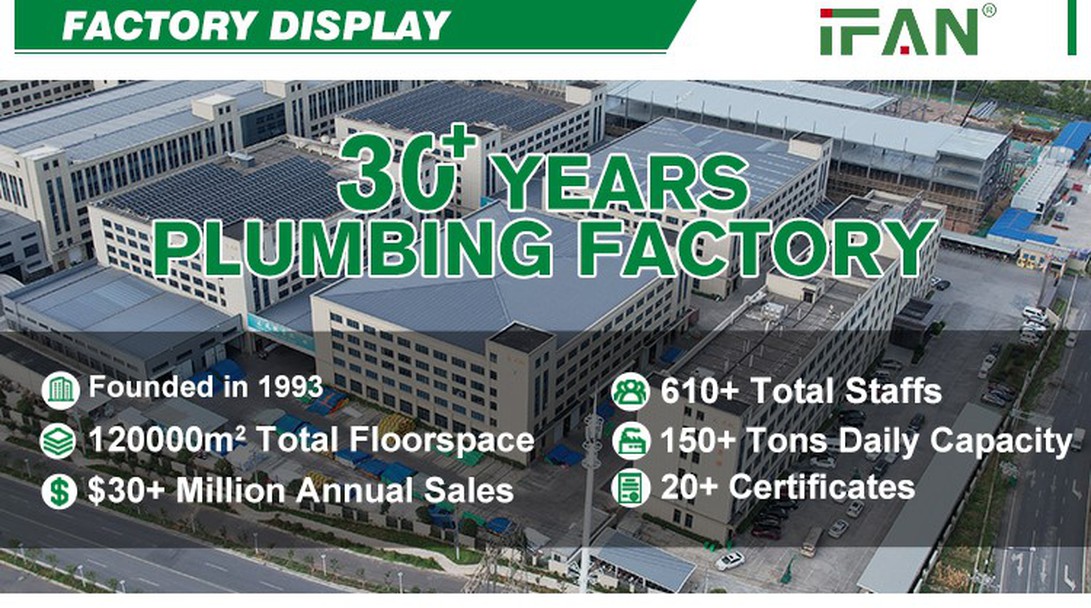
30+Years |
|
Contact Us |
Welcome to contact IFAN, we are online 24 hours a day to answer your questions!
High-pressure piping systems demand careful attention to every connection. Pipes must transport fluids without excessive deformation, while fittings need to maintain reliable joints under continuous internal forces. Choosing an unsuitable fitting can lead to leakage, joint failure, or costly service interruptions.
HDPE fittings can support many pressurized water, irrigation, utility, and industrial applications when their pressure ratings match the system requirements. Their performance comes from the properties of high-density polyethylene, combined with appropriate fitting design and joining techniques. However, pressure capability should always be evaluated according to pipe dimensions, temperature, fluid conditions, and the selected joining method.
Understand Pressure Ratings
Pressure performance begins with selecting the correct product. HDPE fittings are manufactured for different pressure conditions, and their allowable working pressure depends on several factors.
Pipe diameter, wall thickness, SDR, material grade, operating temperature, and service conditions can all influence pressure capability. A fitting should therefore be selected as part of a complete pressure-rated system.
Designers should review manufacturer data rather than relying on general assumptions. The fitting must meet or exceed the requirements established for the intended pipeline.
Create Strong Fusion Connections
One of the important advantages of HDPE systems is their ability to use heat fusion. Compatible pipe and fittings can be heated and joined to form a continuous connection.
A properly fused joint can distribute internal forces across the connection area. This reduces reliance on separate mechanical sealing components in applications designed for fusion joining.
Fusion quality depends on accurate preparation and controlled procedures. Clean surfaces, correct alignment, suitable heating, joining pressure, and adequate cooling all affect the final joint.
Manage Internal Pressure Forces
Pressure creates forces throughout a pipeline. These forces become particularly important at bends, branches, reducers, and changes in pipe direction.
HDPE fittings must be capable of handling the forces generated by the operating pressure. The pipeline design should also include appropriate restraint where necessary.
Thrust blocks, mechanical restraints, anchors, or other measures may be required depending on the system configuration. The fitting itself should not be expected to compensate for inadequate pipeline engineering.
Support High-Pressure Water Systems
Water transmission and distribution networks can operate under substantial pressure. Long pipelines may also experience pressure fluctuations caused by pumps, valves, elevation changes, or changing demand.
Suitable HDPE fittings can provide reliable connections for many pressurized water systems. Their corrosion resistance can also be useful in environments where metal fittings might face long-term deterioration.
Before installation, engineers should confirm the pressure class and temperature rating. The selected fitting should also comply with the requirements of the complete water pipeline system.
Handle Pressure Changes
A pipeline may experience more than one constant pressure value. Pump starts, rapid valve closures, and sudden changes in flow can create temporary pressure surges.
These events can place additional stress on fittings and joints. Hydraulic analysis can help identify potential surge conditions during system design.
Using appropriately rated HDPE fittings is important, but good hydraulic control is equally valuable. Proper valve selection, gradual operating procedures, and suitable surge protection can help reduce unnecessary pressure spikes.
Consider Temperature Effects
Pressure capacity can change as operating temperature increases. HDPE becomes more flexible at elevated temperatures, which can affect the allowable pressure over extended periods.
For this reason, pressure ratings should always be considered together with temperature. A fitting suitable for a particular pressure at ambient conditions may have a different allowable working pressure at higher temperatures.
Engineers should use manufacturer pressure-temperature data when designing systems exposed to heat. The fitting and pipe should operate within their specified limits.
Maintain Reliable Branch Connections
High-pressure pipelines often require branches for additional distribution lines, equipment, or service connections. These branch points can introduce additional mechanical and hydraulic demands.
HDPE tees and branch fittings can provide dedicated connection points for these requirements. Their configuration should match the pipe dimensions and pressure classification of the network.
Branch design should also consider flow distribution. Poorly designed branches can create unnecessary pressure losses or uneven system performance.
Protect Against External Loads
Internal pressure is only one consideration. Underground HDPE pipelines may also experience soil loads, traffic loads, settlement, and construction-related forces.
Proper trench design and installation can help protect the pipeline from excessive external stress. Bedding should provide suitable support, while backfill should follow project specifications.
External loads should be considered during the design stage. A pressure-rated fitting still requires an appropriate surrounding environment to achieve reliable long-term performance.
Inspect and Test High-Pressure Connections
Testing provides an important check before a pressurized pipeline enters service. Proper testing procedures can identify installation problems and verify system integrity.
Fusion joints should receive visual inspection for obvious defects. Depending on the application, pressure testing may also be required according to relevant standards and project specifications.
Testing should be performed using established procedures and appropriate safety measures. High-pressure systems can store significant energy, so testing should always receive professional attention.
Select HDPE Fittings Carefully
A high-pressure application requires more than a fitting that simply appears robust. Engineers should review the fitting's pressure rating, dimensions, SDR compatibility, material grade, temperature limits, and joining method.
The pipe and fitting should work as a coordinated system. Transition points require additional attention because different materials or connection methods can have different pressure capabilities.
Manufacturer documentation provides important information for final selection. For specialized applications, engineers should also verify applicable standards and project requirements.
Build Reliable High-Pressure Networks
HDPE fittings can handle many high-pressure applications when engineers select suitable products and design the complete pipeline correctly. Fusion joining, corrosion resistance, flexibility, and strong material performance can make HDPE a practical option for pressurized systems.
However, pressure performance depends on more than the fitting alone. Temperature, surge conditions, pipe dimensions, external loads, joint quality, and system restraints all influence reliability.
A carefully engineered installation can allow HDPE fittings to support demanding pressure conditions while maintaining dependable service. Proper product selection and controlled installation are essential for achieving the expected performance.