
Improve Flow Efficiency With CPVC Pipe Fittings
Jun 29, 2026

| Product Name | CPVC Pipe Fittings |
| Color | Yellow or Customized |
| Size | 1/2"-2" |
| Brand | IFAN or Customized |
| OEM |
Support |
| Sample | Free |
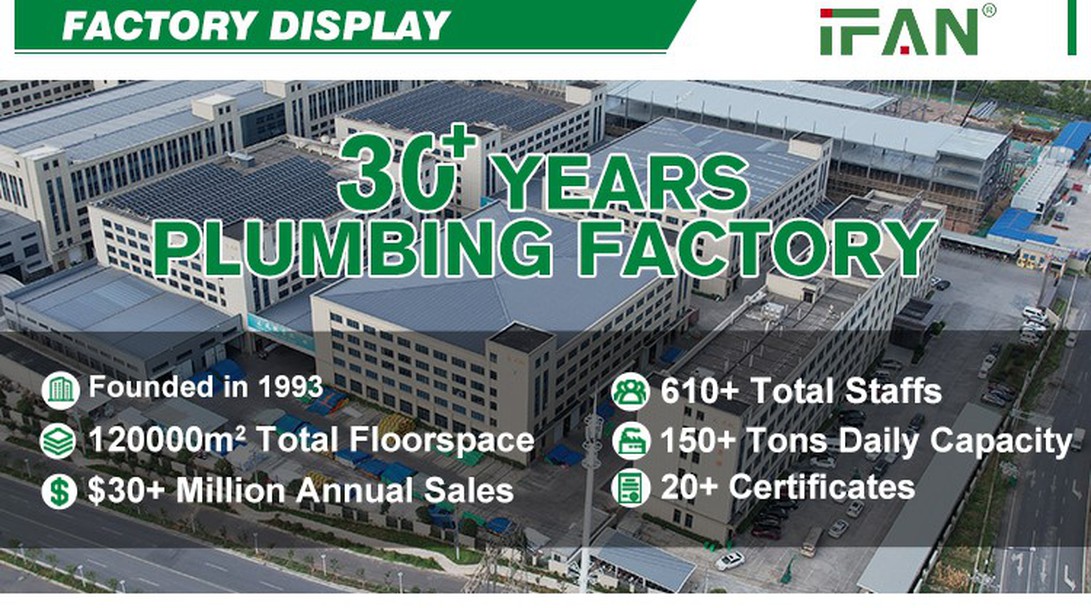
| Experience | 30+Years |
| Contact Us | Click HERE to contact us now! |
Welcome to contact IFAN, we are online 24 hours a day to answer your questions!
Why Flow Efficiency Matters in Plumbing Design
Flow efficiency is one of the most important performance indicators in any plumbing system. It determines how smoothly water moves through pipes, how much pressure is maintained at outlets, and how effectively the system responds to demand changes. When flow is restricted, the entire system becomes less effective, often leading to uneven pressure distribution and reduced user comfort.
In modern plumbing design, CPVC pipe fittings are often selected to support better flow efficiency. Their internal characteristics and stable connection design help reduce unnecessary resistance within the pipeline. This allows water to move more freely through the system, improving overall performance in both residential and commercial environments.
Smooth Internal Surfaces Reduce Flow Resistance
One of the key factors affecting flow efficiency is the condition of the internal pipe surface. Rough or irregular surfaces can create friction, slowing down water movement and increasing pressure loss over distance.
CPVC fittings are manufactured with smooth internal surfaces that help minimize friction during water flow. Unlike some traditional materials that may develop scaling or internal roughness over time, CPVC maintains a consistent surface condition. This smoothness allows water to travel with less resistance, supporting more efficient distribution throughout the system.
Stable Joints Help Maintain Consistent Flow Paths
In any piping system, connection points play a significant role in determining flow behavior. Poorly aligned or unstable joints can disrupt the smooth movement of water, creating turbulence or minor flow restrictions.
CPVC pipe fittings are designed to create stable and aligned connections between pipe sections. When installed correctly, they form continuous flow paths with minimal disruption at the joints. This helps maintain consistent water movement throughout the system, reducing localized pressure drops and improving overall hydraulic efficiency.
Reducing Turbulence in Water Movement
Turbulence occurs when water flow is interrupted or redirected abruptly within a pipe system. This can lead to energy loss, reduced pressure efficiency, and uneven distribution across outlets.
CPVC fittings help reduce turbulence by providing gradual and well-formed transitions between pipe sections. Their design supports smoother directional changes, which minimizes abrupt flow disruptions. As a result, water can move through the system in a more controlled manner, improving efficiency and reducing unnecessary energy loss in pumped systems.
Consistent Diameter Support for Balanced Flow
Maintaining consistent internal diameter throughout a plumbing system is essential for stable flow performance. Any sudden change in diameter can affect pressure balance and create inefficiencies in water distribution.
CPVC pipe fittings are designed to match standard pipe dimensions, ensuring that internal flow paths remain consistent. This uniformity helps maintain balanced pressure throughout the system, especially in larger installations with multiple branches. By preserving consistent flow channels, CPVC systems help avoid localized inefficiencies that can impact overall performance.
Improved Performance in Multi-Outlet Systems
Modern buildings often require plumbing systems that supply water to multiple outlets simultaneously. In such systems, maintaining efficient flow distribution is essential to ensure consistent performance at all usage points.
CPVC fittings support multi-outlet systems by maintaining stable flow characteristics across branching networks. Their predictable performance helps engineers design systems that distribute water evenly, even under varying demand conditions. This ensures that all outlets receive adequate flow without significant pressure imbalance.
Reduced Energy Loss in Pumped Systems
In systems that rely on pumps to move water, flow efficiency directly affects energy consumption. Higher resistance in the pipeline requires more energy to maintain desired pressure levels, increasing operational costs.
CPVC pipe fittings help reduce energy loss by minimizing internal resistance and maintaining smooth flow paths. This allows pumps to operate more efficiently, as less energy is required to overcome friction and turbulence. Over time, this contributes to improved energy performance and lower operational expenses in larger plumbing systems.
Long-Term Flow Stability Over System Lifespan
Flow efficiency can degrade over time in systems where internal scaling or material deterioration occurs. This can lead to gradual performance decline and reduced water delivery efficiency.
CPVC fittings maintain long-term flow stability because they resist scaling and internal surface degradation. Their material properties help preserve smooth flow conditions throughout the system's lifespan. This ensures that flow efficiency remains consistent over time, reducing the need for corrective maintenance or system upgrades.
Importance of Proper Installation for Optimal Flow
Even though CPVC fittings are designed for efficient flow performance, installation quality plays a crucial role in achieving optimal results. Misalignment, improper joining, or poor workmanship can introduce unnecessary flow restrictions.
Proper installation ensures that pipe sections are correctly aligned and securely bonded, maintaining smooth internal flow paths. When installed according to recommended practices, CPVC systems deliver their full flow efficiency potential, supporting stable and reliable water distribution.