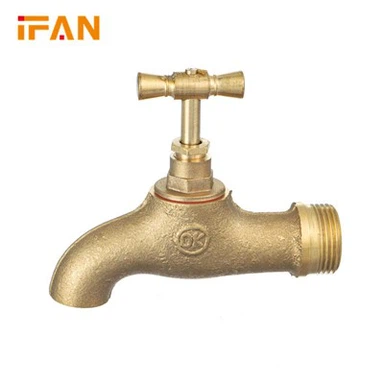
The Circular Economy of Brass Ball Valves: Turning Waste into Urban Mines
Mar 26, 2025
The Circular Economy of Brass Ball Valves: Turning Waste into "Urban Mines"
Introduction: The Concept of Urban Mining in the Brass Industry
The brass ball valve industry, like many manufacturing sectors, generates significant amounts of waste during production and at the end of product lifecycles. However, this waste is not merely a burden-it represents a valuable resource waiting to be reclaimed. The concept of "urban mining" transforms discarded materials into reusable resources, reducing the need for virgin raw materials and minimizing environmental impact. Brass, an alloy of copper and zinc, is particularly well-suited for this approach due to its recyclability. This article explores how the brass ball valve industry can embrace the circular economy, turning waste into "urban mines" and driving sustainability.
The Lifecycle of Brass Ball Valves: From Production to Disposal
Brass ball valves are widely used in plumbing, industrial systems, and energy distribution due to their durability and reliability. However, their production involves energy-intensive processes, including mining, refining, and manufacturing, which contribute to carbon emissions and resource depletion. At the end of their lifecycle, these valves often end up in landfills, where their potential value is lost. By adopting a circular economy model, the industry can recover and recycle brass from discarded valves, reducing the need for new raw materials and lowering the environmental footprint of production.
The Recycling Process: Transforming Waste into Resources
Recycling brass ball valves involves several key steps. First, discarded valves are collected and sorted to separate brass from other materials. The brass components are then cleaned and processed to remove impurities, such as coatings or contaminants. Next, the cleaned brass is melted down and cast into new forms, ready to be used in manufacturing. This process consumes significantly less energy than producing brass from virgin materials, making it a more sustainable alternative. Additionally, recycling brass reduces the demand for mining, which has severe environmental and social impacts, including habitat destruction and water pollution.

Benefits of Urban Mining for the Brass Ball Valve Industry
Urban mining offers numerous benefits for the brass ball valve industry. Economically, it reduces production costs by providing a steady supply of recycled brass, which is often cheaper than virgin material. Environmentally, it lowers carbon emissions, conserves natural resources, and minimizes waste. Socially, it creates opportunities for new industries and jobs focused on collection, processing, and recycling. Furthermore, embracing urban mining enhances the industry's reputation by demonstrating a commitment to sustainability, which can attract environmentally conscious customers and investors.
Challenges and Strategies for Implementing Urban Mining
While the concept of urban mining is promising, its implementation faces several challenges. One major issue is the lack of efficient collection systems for discarded brass ball valves, which are often scattered across various industries and locations. To address this, governments and industry stakeholders can establish take-back programs or incentivize the return of used valves. Another challenge is the need for advanced recycling technologies to ensure high-quality brass recovery. Investing in research and development can improve recycling efficiency and reduce costs. Collaboration among manufacturers, recyclers, policymakers, and consumers is essential to create a robust circular economy framework.
Conclusion: Paving the Way for a Sustainable Brass Ball Valve Industry
The brass ball valve industry stands at a crossroads, where the traditional linear model of "take, make, dispose" is no longer viable. By embracing the circular economy and urban mining, the industry can transform waste into valuable resources, reducing its environmental impact and securing a sustainable future. Recycling brass not only conserves natural resources but also supports economic growth and innovation. As the world moves toward greater sustainability, the brass ball valve industry has the opportunity to lead by example, demonstrating how waste can be turned into "urban mines" and paving the way for a greener, more resilient economy.