
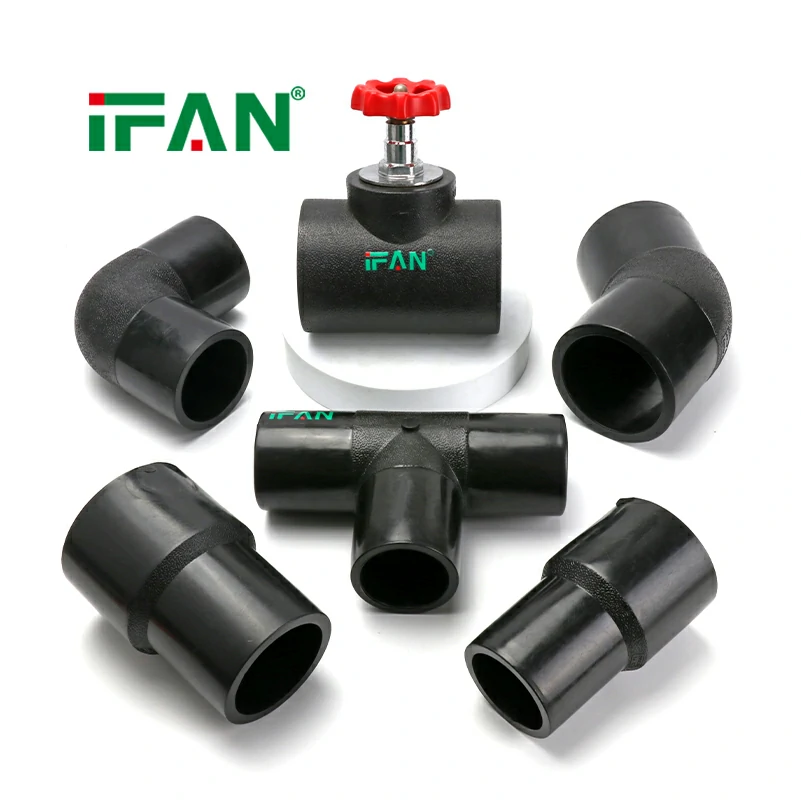


HDPE Butt Fusion Fittings Improve Water Distribution
Brand: IFAN
Materials:PE
Size:63-400mm
Sample: Free Sample
Service: OEM&ODM
- Fast Delievery
- Quality Assurance
- 24/7 Customer Service
Product Introduction
| Product Name | HDPE Butt Fusion Fittings |
| Size | 63-400mm |
| Color | Black Color Or Customized |
| Connection | Welding |
| MOQ | 100PCS |
| Sample | Sample Free |
| Contact |
Understanding the Role of Butt Fusion Fittings in Water Networks
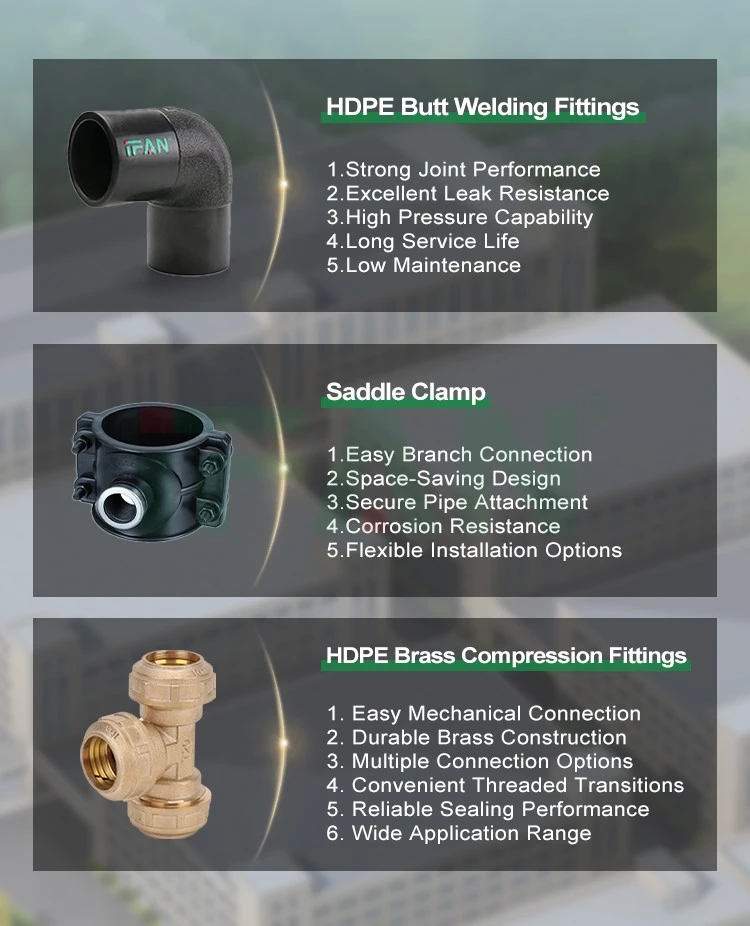
Water distribution systems rely on correctly connected pipelines to transport water from treatment facilities, storage tanks, and pumping stations to residential, commercial, and industrial users. HDPE butt fusion fittings are used to connect compatible high-density polyethylene pipes and create the pipeline configurations required for these networks. Common fitting types include elbows, tees, reducers, and other components designed to accommodate changes in direction, pipe diameter, and flow distribution.
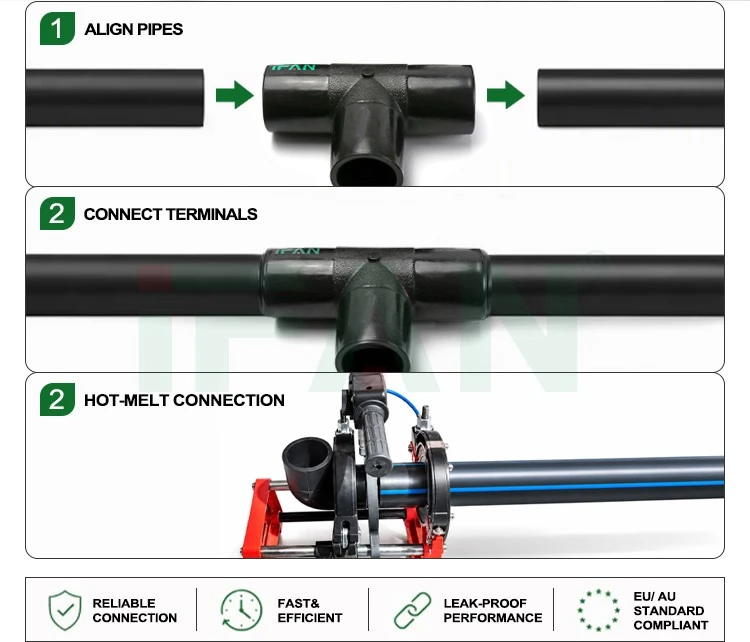
The butt fusion process joins prepared pipe and fitting ends through controlled heating and pressure. When the components are compatible and the joining procedure is correctly followed, the resulting connection forms an integrated part of the pipeline. This allows engineers to design distribution routes with defined branches, transitions, and connection points according to hydraulic requirements.
Improving water distribution involves more than selecting suitable fittings. Pipe sizing, pressure management, network layout, installation quality, and operational control all influence how water moves through the system. HDPE butt fusion fittings must therefore be considered as part of an integrated distribution design.
Creating Continuous Connections Across Distribution Networks
A water distribution network may extend across residential streets, industrial facilities, agricultural areas, and underground utility corridors. Different sections of the network must be connected according to their required dimensions, alignment, and operating pressure. Butt fusion fittings provide designated connection points for constructing these pipeline arrangements.
During installation, the pipe and fitting ends are prepared, aligned, heated, and joined using a suitable fusion machine. The components must remain correctly positioned throughout the process to establish the required joint geometry. Once the connection has cooled according to the specified procedure, the pipeline can proceed to the next installation stage.
The ability to connect compatible polyethylene components through a defined joining sequence helps contractors assemble distribution routes according to engineering drawings. Straight sections can be connected along planned routes, while elbows and tees accommodate directional changes and branching requirements. The resulting arrangement must still be evaluated for hydraulic performance, accessibility, and compliance with the project's design standards.
Managing Water Pressure Throughout the Network
Water pressure varies across a distribution system according to elevation, pipeline length, demand, pump operation, and friction losses. Fittings must be selected to match the pressure classification of the connected pipes and the operating conditions specified by the system designer.
HDPE butt fusion fittings are available in different dimensions and pressure classifications. Their suitability depends on the fitting specification, polyethylene material grade, pipe dimensions, and the conditions under which the system will operate. Engineers should confirm that every connection is appropriate for the expected working pressure and any foreseeable pressure fluctuations.
The design must also account for transient pressure changes caused by pump starts, valve closures, or sudden changes in water demand. These events can generate pressure surges that place additional loads on the pipeline. Correctly rated fittings form part of the pressure-containing system, but they cannot compensate for inadequate hydraulic design or uncontrolled operating conditions.
Pressure management should therefore include appropriate pipe sizing, pump selection, valve control, and surge assessment. When these elements are coordinated, the distribution network can operate within its defined pressure limits.
Directing Water Through Branches and Directional Changes
Water distribution networks rarely consist of straight pipes alone. They must follow road layouts, pass around structures, connect separate service areas, and distribute water to multiple branches. Butt fusion fittings help create these configurations while maintaining compatibility with the connected HDPE pipeline.
Elbows are used to change the direction of a pipeline, while tees establish branch connections. Reducers connect sections with different specified diameters when the design requires a change in pipe size. Each fitting must be installed in the correct orientation so that the completed pipeline follows the intended route.
Branch layout also affects hydraulic performance. Poorly planned connections, unnecessary changes in direction, or unsuitable diameter transitions may contribute to additional head loss or uneven pressure distribution. Engineers should evaluate fitting locations alongside flow requirements, expected demand, and available operating pressure.
A properly designed arrangement helps direct water to the required locations without treating individual connections as isolated installation tasks. The overall geometry of the network should support the intended flow paths and allow valves, meters, and other equipment to be positioned where they are needed.
Distinguishing Butt Fusion from Socket Welding
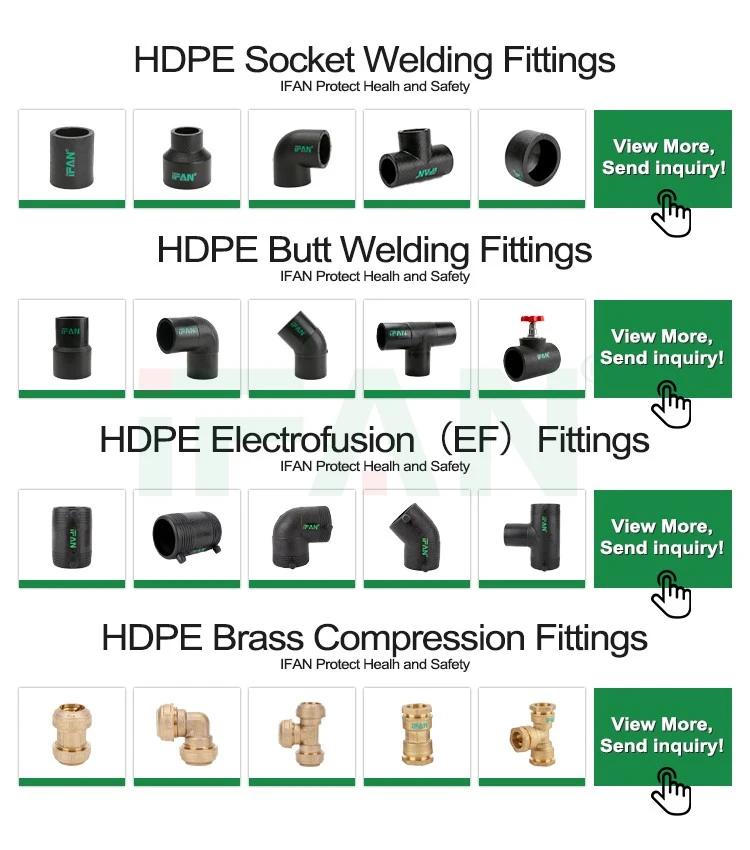
HDPE butt fusion fittings and HDPE socket welding fittings use different joining methods, making it important to select the appropriate procedure for each application.
Butt fusion joins the prepared end faces of a pipe and fitting. A dedicated machine clamps the components, maintains alignment, and controls the heating and joining sequence. The method is commonly used in larger-diameter distribution pipelines where sufficient space is available for the equipment and pipe handling.
Controlling Installation Quality in Water Distribution Projects
Installation quality directly affects the integrity of a water distribution network. Before fusion begins, installers should verify component compatibility, prepare clean joining surfaces, and check that the pipe and fitting are correctly aligned. The fusion equipment must operate within the specified temperature and joining parameters.
Supporting Efficient Network Operation and Maintenance
Water distribution requirements can change as communities expand, industrial demand increases, or existing infrastructure is modified. A well-documented pipeline layout helps operators identify fitting locations, branch connections, and transitions when planning extensions or maintenance activities.


Hot Tags: hdpe butt fusion fittings improve water distribution, China hdpe butt fusion fittings improve water distribution manufacturers, suppliers, factory, Compression HDPE Pipe Fittings, HDPE Compression Fittings, HDPE Pipe and Fitting, HDPE Water Pipe Fittings, PE Pipe, PE Pipe Fitting