
Brass Ball Valve Simplifies Flow Control
Nov 24, 2026

| Product Name | Brass Ball Valve |
| Color | Brass or Sliver Color |
| Size | 1/2''-4'' |
| Brand | IFAN or Customized |
| OEM |
Support |
| Sample | Free |
| Experience | 30+Years |
Welcome to contact IFAN, we are online 24 hours a day to answer your questions!
Introduction
Controlling fluid movement is an essential requirement in plumbing, water distribution, and industrial piping systems. Whether adjusting the operation of a household water line or isolating a section of commercial equipment, users need valves that are easy to operate and dependable during everyday use. Brass ball valves have become a popular choice because of their straightforward construction and convenient operating mechanism. Unlike valves that require multiple handle rotations, a ball valve uses a quarter-turn movement to switch between open and closed positions. This simple design makes fluid control easier while reducing unnecessary operating steps. In addition, brass provides a combination of strength, machinability, and corrosion resistance suitable for many common applications. By understanding the structure and practical advantages of brass ball valves, users can make better decisions when selecting flow control components for different piping systems.
A Simple Structure for Convenient Operation
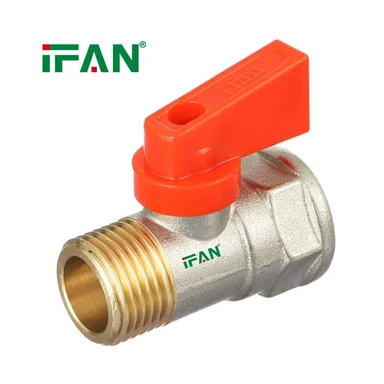
The working principle of a brass ball valve is based on a spherical component with a hole passing through its center. This component, known as the ball, rotates inside the valve body to control the movement of fluid.
When the opening aligns with the pipeline, water or another compatible medium can pass through the valve. Rotating the handle approximately 90 degrees moves the ball into a position that blocks the internal passage.
This mechanism allows users to change the valve state quickly without repeatedly turning a handwheel. Its straightforward structure also makes the operating position relatively easy to identify. For applications requiring frequent isolation or straightforward on-off control, this design offers considerable convenience.
Efficient Flow Management in Different Applications
Brass ball valves are widely used in residential plumbing because they provide convenient control over individual water supply lines. They can be installed beneath sinks, near water heaters, beside washing machines, or at other locations where separate pipe sections may need to be isolated.
Commercial buildings also benefit from their practical operation. Offices, hotels, restaurants, and apartment complexes often contain multiple water distribution branches. Installing suitable shutoff valves at strategic locations allows maintenance personnel to isolate specific sections without interrupting the entire supply network.
In certain industrial applications, brass ball valves can also control compatible fluids. However, the selected product must meet the required pressure, temperature, and chemical compatibility specifications.
Why Brass Is a Practical Material
The valve body plays an important role in overall product performance. Brass is commonly used because it offers useful mechanical strength and can be machined into precise internal shapes.
Its corrosion resistance also makes it suitable for many ordinary water service environments. Compared with conventional carbon steel, brass is less susceptible to red rust, helping maintain the condition of the valve body during normal operation.
Another advantage is its manufacturing flexibility. Brass can be processed into different valve sizes and connection configurations, giving manufacturers the ability to serve various plumbing requirements.
For drinking water applications, users should select appropriately certified brass products. The alloy composition should also be suitable for the local water conditions, particularly where dezincification may be a concern.
Installation Flexibility and Maintenance
Brass ball valves are available with different connection types, including threaded and other application-specific configurations. This variety makes it easier for contractors to integrate them into compatible piping arrangements.
During installation, the valve should be positioned so that its handle remains accessible. This is particularly important when the valve may need to be operated during equipment servicing or unexpected plumbing problems.
Maintenance is generally straightforward, but regular inspection remains necessary. Users should check for external leakage, damaged handles, corrosion, and unusual resistance when operating the valve. The internal sealing seats should also remain in suitable condition to support effective flow control.
Selecting the Right Valve for Reliable Performance
Not every brass ball valve is designed for the same operating environment. Before purchasing, users should check the nominal size, pressure rating, temperature range, connection type, and approved fluid applications.
Full-port and standard-port designs may also have different internal passage dimensions, which can influence pressure loss and flow capacity. Where unrestricted flow is important, the internal design should be considered as part of the overall system specification.
Choosing a product from a reliable manufacturer and following its installation instructions can help reduce operating problems and improve service life.