
Can CPVC Pipe Fittings Withstand Extreme Temperature Conditions?
May 28, 2026

|
Product Name |
CPVC Pipe Fitting |
|
Standard |
ASTM2846 |
|
Color |
Cream Color |
|
Size |
1/2''-2'' |
|
Brand |
IFAN or Customized |
|
OEM |
Support |
|
Sample |
Free |
|
Experience |
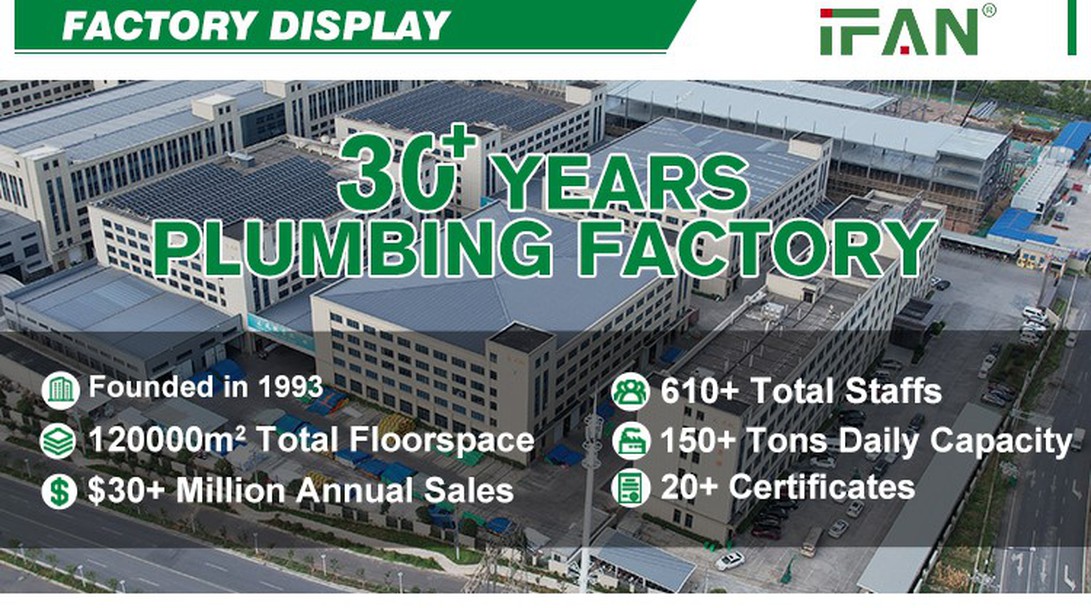
30+Years |
|
Contact Us |
Welcome to contact IFAN, we are online 24 hours a day to answer your questions!
Introduction to CPVC Pipe Fittings
CPVC, or chlorinated polyvinyl chloride, is a thermoplastic material widely used for piping systems due to its superior mechanical and chemical properties. The pipe fittings made from CPVC-elbows, tees, couplings, and reducers-play a critical role in connecting and directing the flow of fluids. Over the years, CPVC has gained popularity in residential, commercial, and industrial applications because it can handle higher temperatures than standard PVC. This ability raises the question: can CPVC pipe fittings withstand extreme temperature conditions? Understanding the material's properties, limitations, and performance under stress provides valuable insights for engineers, contractors, and homeowners alike.
Thermal Resistance of CPVC
The primary factor that determines a material's suitability for extreme temperatures is its thermal resistance. CPVC pipe fittings are specifically engineered to tolerate hot fluids. Standard CPVC products typically withstand temperatures up to 200°F (93°C), and specialized grades can handle even higher heat in industrial applications. This is achieved through the chlorination process, which strengthens the polymer chains and improves heat tolerance. As a result, CPVC fittings retain their shape, maintain pressure integrity, and resist deformation even when exposed to hot water or steam over extended periods, making them reliable for high-temperature systems.
Performance Under Hot Water Systems
In residential and commercial plumbing, hot water supply systems often operate near CPVC's upper temperature limit. CPVC pipe fittings are designed to handle these conditions without warping, cracking, or leaking. Unlike metals that may corrode or require insulation to protect against heat loss, CPVC maintains consistent performance while also being lightweight and easy to install. Additionally, CPVC does not scale internally, ensuring uninterrupted water flow and long-term efficiency. This combination of thermal resilience and chemical stability makes CPVC a preferred choice for hot water distribution networks in homes, hotels, and office buildings.
Behavior in Extreme Cold Conditions
While CPVC is widely recognized for heat resistance, it also performs adequately in colder conditions. CPVC fittings remain durable and flexible at low temperatures, although they are more rigid than some other plastics. Extreme cold does not typically compromise their structural integrity, provided they are installed correctly and supported to prevent mechanical stress. However, like most plastics, CPVC can become brittle if subjected to sudden impact at freezing temperatures. Overall, its performance in cold environments complements its thermal resistance, making it versatile for both hot and cold fluid systems.
Chemical Stability at High Temperatures
One of the challenges of extreme temperature applications is the interaction between heat and chemicals. CPVC excels in this area because it resists degradation from acids, bases, salts, and other industrial chemicals, even at elevated temperatures. This ensures that fittings maintain their mechanical strength and connection integrity under demanding conditions. For industries like chemical processing, laboratories, or water treatment plants, CPVC pipe fittings offer a reliable alternative to metals, which may corrode or react with certain fluids. Their combination of thermal and chemical stability ensures long-term performance and safety.
Installation Advantages in High-Temperature Systems
The ease of installation is another reason CPVC performs well in extreme temperature conditions. CPVC fittings are lightweight and can be joined using solvent cement, forming leak-proof seals without welding or threading. Unlike metals that require specialized tools and careful handling to prevent heat-induced stress, CPVC can be quickly and reliably installed in hot water or heating systems. Once set, the fittings withstand repeated temperature cycles without loosening or deforming. This reliability, combined with installation efficiency, makes CPVC an ideal choice for high-temperature applications.
Limitations and Considerations
Despite their impressive performance, CPVC pipe fittings have defined limitations. Extremely high temperatures above the material's rated maximum, continuous exposure to pressurized steam, or direct contact with flame can compromise the fittings. For such cases, engineers must evaluate system requirements carefully and consider alternative materials like metal alloys or specialized plastics. Proper installation, support, and avoidance of direct heat exposure can further extend CPVC's service life in extreme temperature systems. Understanding these boundaries ensures safe and effective use of CPVC fittings.