
Why Are CPVC Pipe Fittings Highly Preferred Today?
May 28, 2026

|
Product Name |
CPVC Pipe Fitting |
|
Standard |
ASTM2846 |
|
Color |
Cream Color |
|
Size |
1/2''-2'' |
|
Brand |
IFAN or Customized |
|
OEM |
Support |
|
Sample |
Free |
|
Experience |
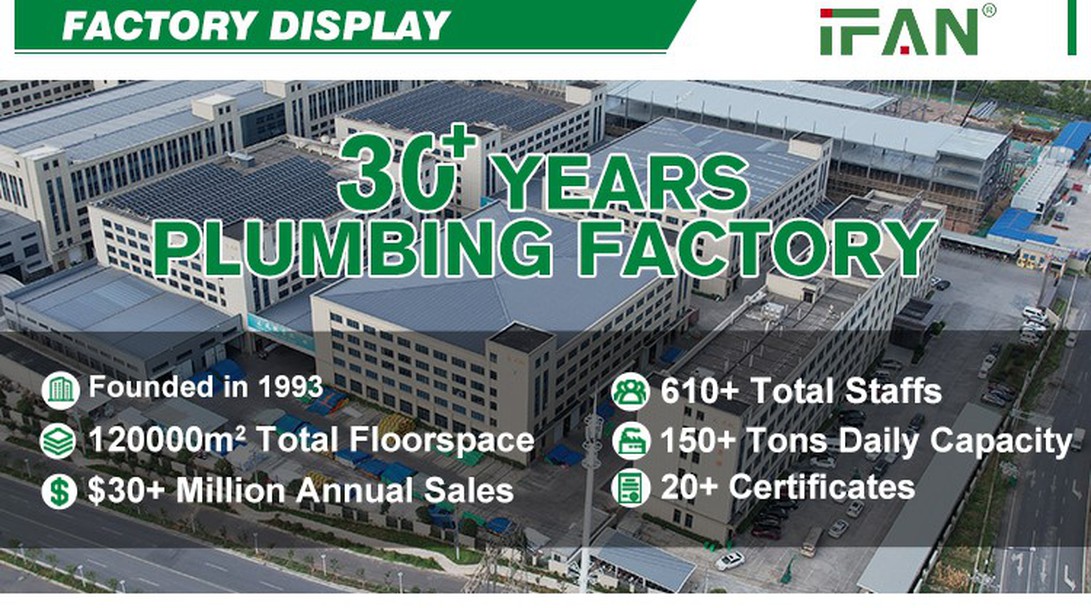
30+Years |
|
Contact Us |
Welcome to contact IFAN, we are online 24 hours a day to answer your questions!
Introduction to CPVC Pipe Fittings
CPVC, or chlorinated polyvinyl chloride, has gained significant attention in modern plumbing and industrial applications. It is an advanced form of PVC, treated with additional chlorine, which increases its strength, chemical resistance, and thermal stability. CPVC pipe fittings are the connectors and joints that allow CPVC pipes to form complex plumbing networks efficiently. Their popularity has surged because they address many common problems found in traditional piping materials, such as corrosion, scaling, and temperature limitations. For both residential and industrial applications, CPVC fittings have emerged as a reliable, long-lasting choice that balances performance with cost-effectiveness.
Superior Heat and Pressure Resistance
One of the primary reasons CPVC pipe fittings are highly preferred today is their ability to withstand elevated temperatures and pressures. Standard PVC can deform or fail under hot water, but CPVC typically handles temperatures up to 200°F (93°C) without losing structural integrity. Additionally, CPVC fittings maintain reliable pressure resistance, making them suitable for hot water supply systems, heating networks, and industrial processes. This combination of thermal and mechanical resilience ensures that installations remain safe, durable, and leak-free over long periods, even in demanding environments where conventional materials would fail.
Chemical Resistance and Longevity
CPVC pipe fittings are also highly valued for their chemical resistance. In many applications, pipes carry fluids that can corrode metals or degrade standard plastics over time. CPVC's molecular structure allows it to resist attack from a wide range of chemicals, including acids, bases, and salts. This feature makes CPVC ideal for chemical processing plants, laboratories, and even municipal water systems where chemical additives might be present. Because CPVC resists degradation, it maintains its shape, strength, and connection integrity for decades, reducing maintenance costs and extending the lifespan of plumbing networks significantly.
Ease of Installation and Cost Efficiency
Another factor driving CPVC's preference is its simplicity in installation. CPVC fittings are lightweight and easy to handle, which reduces labor costs and installation time compared to traditional metal fittings. They can be joined using solvent cement, forming strong, leak-proof connections without the need for welding or threading. This ease of assembly, combined with minimal maintenance requirements, translates to overall cost savings for both residential projects and large-scale industrial systems. For builders, plumbers, and engineers, this convenience is a practical advantage that complements the material's technical benefits.
Safety and Hygiene Benefits
Safety and hygiene are increasingly important in modern plumbing systems, and CPVC pipe fittings excel in these areas. Unlike metal pipes, CPVC does not corrode, rust, or leach harmful metals into the water supply, making it safe for potable water systems. Additionally, CPVC's resistance to heat reduces the risk of sudden failures that could lead to leaks, flooding, or system damage. Many CPVC fittings meet international health and safety standards, ensuring that water quality is preserved over time. This combination of reliability, hygiene, and compliance makes CPVC an attractive choice for residential, commercial, and healthcare facilities.
Environmental and Sustainability Advantages
Beyond performance and safety, CPVC pipe fittings also offer environmental benefits. Because CPVC is durable and long-lasting, it reduces the need for frequent replacements, lowering material consumption and waste generation. Furthermore, CPVC is recyclable under certain conditions, and its production has a smaller environmental footprint compared to metals that require mining and high-energy processing. Using CPVC contributes to sustainable building practices while still providing robust, high-performance piping solutions. As environmental awareness grows, this advantage makes CPVC even more appealing to architects, engineers, and facility managers.
Versatility Across Applications
CPVC pipe fittings are highly versatile and suitable for a broad range of applications. In residential plumbing, they handle hot and cold water distribution efficiently. In commercial buildings, CPVC supports heating and cooling systems, while in industrial settings, it transports various chemicals safely. The material can be molded into numerous fitting types-elbows, tees, couplings, reducers, and more-allowing for customized piping systems without compromising performance. This adaptability ensures that CPVC can meet the needs of diverse sectors while maintaining reliability under varying operational conditions.
Conclusion: Why CPVC Is Preferred
In summary, CPVC pipe fittings are highly preferred today due to their exceptional combination of heat resistance, chemical stability, installation convenience, safety, and environmental advantages. They outperform traditional metals and standard plastics in durability, reliability, and cost-effectiveness. From residential plumbing to industrial processes, CPVC provides a practical, long-term solution that meets modern demands for efficiency, safety, and sustainability. As infrastructure and water systems continue to evolve, CPVC fittings remain a trusted choice for engineers, contractors, and homeowners seeking dependable, high-performance piping systems.