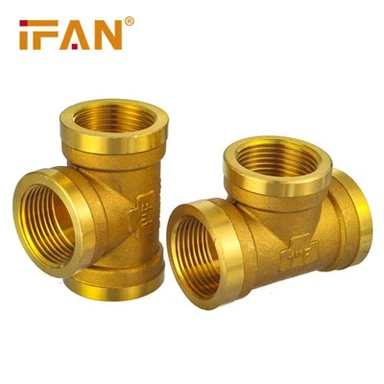

Corrosion Resistance Benefits of PEX Slide Fittings
Oct 29, 2026

| Product Name | PEX Slide Fittings |
| Size | 16-32mm |
| Color | Brass Color Or Customized |
| Connection | Sliding |
| MOQ | 200PCS |
| Sample | Sample Free |
| Contact | Click HERE to contact us now! |
Welcome to contact IFAN, we are online 24 hours a day to answer your questions!
Introduction: Protecting Plumbing Systems from Corrosion
Corrosion is a common concern in plumbing because it can gradually weaken components, affect water quality, and increase maintenance costs. In systems that use conventional metal pipes and connectors, prolonged contact with water and certain chemical conditions may contribute to rust, surface deterioration, or mineral buildup. These problems can eventually interfere with reliable water distribution. PEX slide fittings offer an alternative connection method for compatible cross-linked polyethylene tubing, combining a mechanical joining design with materials selected for specific plumbing applications.
Their corrosion-related advantages depend on the materials used in the complete assembly. PEX tubing does not rust like iron or steel, while many approved polymer fittings are also resistant to corrosion. Some slide fittings contain metal components, however, so their resistance must be evaluated according to the manufacturer's specifications. Understanding these distinctions helps homeowners, contractors, and plumbing professionals select suitable products for different water conditions and build systems that remain dependable over time.
1. Why PEX Tubing Does Not Rust Like Metal Pipes
One of the main advantages of PEX plumbing is the nature of its base material. PEX, or cross-linked polyethylene, is a polymer rather than a metal. Because it contains no iron, it does not develop iron oxide rust in the same way as conventional steel or iron piping.
This characteristic can be valuable in buildings where plumbing components remain in service for many years. In metallic systems, corrosion may gradually affect the pipe wall, contribute to discoloration, or create rough internal surfaces. PEX tubing avoids these particular iron-rusting mechanisms, helping maintain the integrity of the pipe material under its approved operating conditions.
PEX slide fittings complement this tubing by providing mechanical connections without requiring the pipe itself to be threaded. However, the fitting material must also be considered. A polymer fitting and a brass fitting may respond differently to their surrounding environment. Selecting compatible, approved components is therefore essential when corrosion resistance is a priority.
2. Reducing Problems Associated with Internal Corrosion
Internal corrosion can create several difficulties in a plumbing system. As metal surfaces deteriorate, corrosion products may enter the water, and deposits can accumulate in certain sections of the pipe. Depending on the material and water chemistry, these changes may affect appearance, flow, or maintenance requirements.
PEX tubing does not develop the same rust layers associated with iron-based pipes. Its smooth polymer interior can also help limit the accumulation of some deposits compared with roughened or deteriorated surfaces. Nevertheless, mineral scale can still form in PEX systems when water conditions encourage it, and other components may introduce restrictions.
PEX slide fittings help connect the tubing into a complete distribution network. Their internal geometry and material composition influence performance, so installers should check fitting specifications rather than assume that every connector offers the same flow characteristics. Combining suitable tubing with appropriately designed fittings helps reduce corrosion-related concerns while supporting reliable water delivery.
3. Understanding the Corrosion Resistance of Different Fitting Materials
Not all PEX slide fittings are manufactured from the same material. Some systems use polymer components, while others incorporate brass or other metals. This distinction is important because corrosion resistance is a property of the actual material, not simply the method used to connect the pipe.
Polymer fittings do not rust like iron-based metals, although they must still meet requirements for pressure, temperature, chemical compatibility, and long-term structural performance. Brass fittings may offer good durability, but their behavior depends on the alloy composition and the characteristics of the water passing through the system.
For example, certain water chemistries can contribute to dezincification in susceptible brass alloys. This process selectively removes zinc from the material and may weaken the component over time. When metal fittings are required, selecting products designed and approved for the intended water conditions can help reduce this risk.
4. Compatibility with Different Water Conditions
Water chemistry varies from one location to another. Factors such as acidity, alkalinity, dissolved minerals, chloride concentration, and disinfectant levels can influence the performance of plumbing materials.
PEX tubing generally resists many forms of water-related corrosion that affect metals. However, resistance to a particular chemical or disinfectant depends on the tubing formulation, exposure conditions, and product approval. The same principle applies to slide fittings, especially when the assembly includes metallic components.
Installers should review manufacturer documentation when selecting fittings for unusual water conditions, high-temperature applications, or specialized plumbing environments. Local water-quality information can also help identify potential material concerns before installation.
A suitable combination of tubing and fittings reduces the likelihood of premature material deterioration. Rather than relying on broad claims that a product is corrosion-proof, choosing components tested and approved for their intended application provides a more dependable basis for long-term performance.
5. Lower Maintenance Requirements and Lifecycle Costs
Corrosion can increase the cost of maintaining a plumbing system. Damaged metal components may require replacement, and extensive deterioration can make repairs more complicated when pipes are concealed behind walls or beneath floors.
By using PEX tubing that does not rust like iron or steel, installers can eliminate one common source of pipe deterioration. Appropriately selected slide fittings can complement this benefit and help create a durable connection system.
Lower corrosion risk does not mean maintenance is unnecessary. Leaks can still result from incorrect installation, excessive pressure, freezing, physical damage, or incompatible materials. Polymer components can also deteriorate when exposed to conditions outside their approved limits.
A lifecycle assessment should consider the initial cost of the fittings, installation requirements, expected service conditions, accessibility, and potential repair expenses. In many suitable applications, corrosion-resistant materials can help reduce avoidable maintenance and improve the overall value of the plumbing installation.
6. Correct Installation Preserves Material Performance
Even corrosion-resistant components cannot compensate for poor workmanship. Damaged tubing, incompatible fittings, improper sleeve placement, or the use of incorrect tools can undermine the reliability of a connection.
Before assembly, installers should inspect the pipe ends and verify that the fitting, sleeve, and tubing belong to a compatible system. Connections must be completed according to the manufacturer's instructions, followed by the required inspection and pressure testing.
Proper routing and protection are equally important. Tubing should be kept away from damaging surfaces and installed within the specified temperature and pressure limits. Where metal components are present, their suitability for the water chemistry should be verified.
These measures help preserve the intended properties of the materials and reduce the risk of failures unrelated to corrosion.