
Do HDPE Pipe Fittings Reduce Maintenance Costs Effectively?
May 28, 2026

|
Product Name |
HDPE Pipe Fitting |
|
Color |
Blue Color |
|
Size |
20-110mm |
|
Brand |
IFAN or Customized |
|
OEM |
Support |
|
Sample |
Free |
|
Experience |
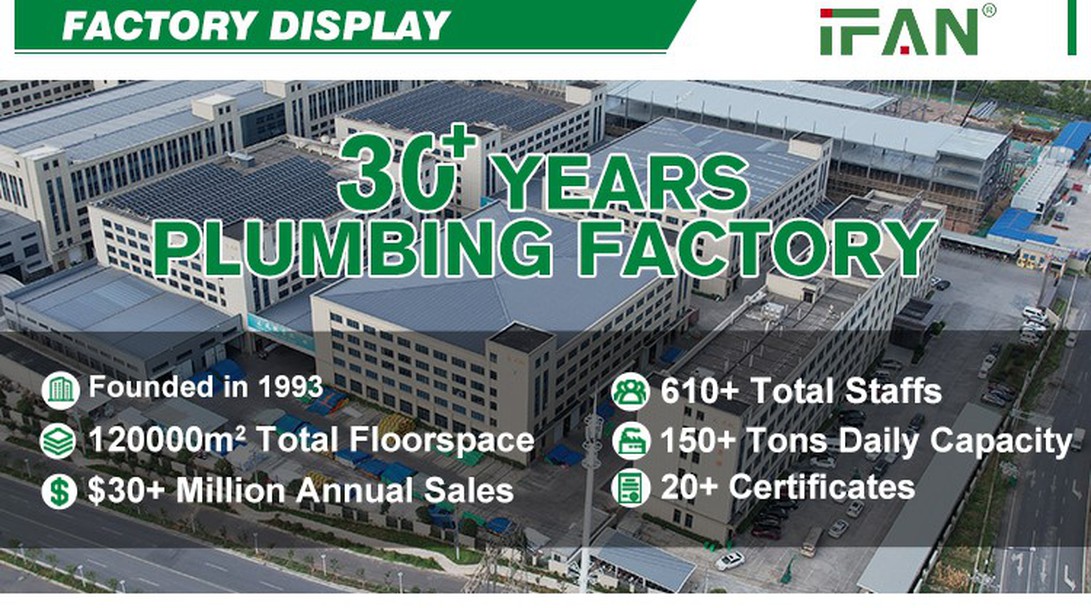
30+Years |
|
Contact Us |
Welcome to contact IFAN, we are online 24 hours a day to answer your questions!
Introduction to HDPE Pipe Fittings
HDPE (High-Density Polyethylene) pipe fittings are widely used in modern piping systems across water supply, gas distribution, agriculture, mining, and industrial processing. These fittings, including elbows, tees, couplings, and reducers, are essential for connecting HDPE pipes and ensuring smooth fluid transportation. One of the most important reasons for their growing popularity is their ability to reduce long-term maintenance costs. In many infrastructure projects, maintenance expenses often exceed initial installation costs over time. Therefore, selecting a material that minimizes repairs, downtime, and replacement needs is a critical decision. HDPE pipe fittings are increasingly recognized as a cost-effective solution in this regard.
Resistance to Corrosion and Its Cost Benefits
One of the main factors that reduces maintenance costs in HDPE systems is their strong resistance to corrosion. Traditional metal pipe fittings are highly vulnerable to rust, oxidation, and chemical degradation when exposed to moisture or aggressive environments. Over time, corrosion leads to leaks, reduced flow efficiency, and frequent repairs. HDPE, on the other hand, is chemically inert and does not corrode under normal operating conditions. This eliminates the need for protective coatings, cathodic protection systems, or regular anti-corrosion maintenance, significantly lowering long-term operational costs.
Reduced Leakage and System Failures
Leakage is one of the most expensive maintenance issues in piping systems. It not only causes water or material loss but also leads to structural damage, environmental issues, and emergency repairs. HDPE pipe fittings use heat fusion technology, which creates a seamless and permanent bond between pipes and fittings. This fusion joint is as strong as the pipe itself and does not rely on gaskets or mechanical seals that can deteriorate over time. As a result, HDPE systems have a much lower risk of leakage, which directly reduces maintenance frequency and associated repair costs.
Long Service Life and Durability
Another key reason HDPE pipe fittings reduce maintenance costs effectively is their long service life. Under proper installation and operating conditions, HDPE systems can last 50 years or more. Unlike metal pipes that may corrode or PVC pipes that can become brittle, HDPE maintains its structural integrity over decades of use. This long lifespan means fewer replacements and fewer system shutdowns for maintenance. For large-scale infrastructure projects, this durability translates into substantial long-term savings and improved operational reliability.
Low Susceptibility to Scaling and Blockage
In many water systems, mineral buildup and scaling are common problems that reduce flow efficiency and require regular cleaning or pipe replacement. Metal pipes are particularly prone to internal scaling, especially in hard water conditions. HDPE pipe fittings have smooth internal surfaces that resist scale formation and sediment buildup. This ensures consistent flow performance over time and reduces the need for chemical cleaning or mechanical maintenance procedures. The reduced risk of blockage helps maintain system efficiency while lowering maintenance effort and cost.
Flexibility and Resistance to Environmental Stress
HDPE pipe fittings are highly flexible compared to rigid materials like steel or PVC. This flexibility allows them to absorb ground movement, pressure fluctuations, and vibration without cracking or breaking. In real-world installations, especially underground pipelines, soil shifting and temperature variations can cause stress on rigid systems, leading to frequent repairs. HDPE's ability to adapt to environmental changes reduces mechanical stress failures, thereby lowering maintenance requirements and extending system reliability.
Lower Installation-Related Maintenance Issues
Improper installation is a major cause of maintenance problems in piping systems. HDPE pipe fittings reduce such risks due to their simple and reliable installation process. They are joined using butt fusion or electrofusion, creating a uniform system that minimizes human error associated with threaded or gasketed joints. Once properly installed, HDPE systems require minimal adjustment or tightening, unlike metal systems that may loosen over time. This installation reliability contributes to fewer long-term maintenance issues.
Reduced Operational Downtime and Labor Costs
Maintenance is not only about material repair but also about system downtime and labor costs. HDPE pipe fittings help reduce both. Because they are durable, leak-resistant, and corrosion-free, they require fewer inspections and emergency interventions. This leads to less downtime in industrial and municipal systems, improving operational efficiency. Additionally, reduced maintenance frequency means lower labor costs over the lifetime of the system, which is especially important for large infrastructure networks.