
Are HDPE Pipe Fittings Ideal For Underground Water Systems?
May 28, 2026

|
Product Name |
HDPE Pipe Fitting |
|
Color |
Blue Color |
|
Size |
20-110mm |
|
Brand |
IFAN or Customized |
|
OEM |
Support |
|
Sample |
Free |
|
Experience |
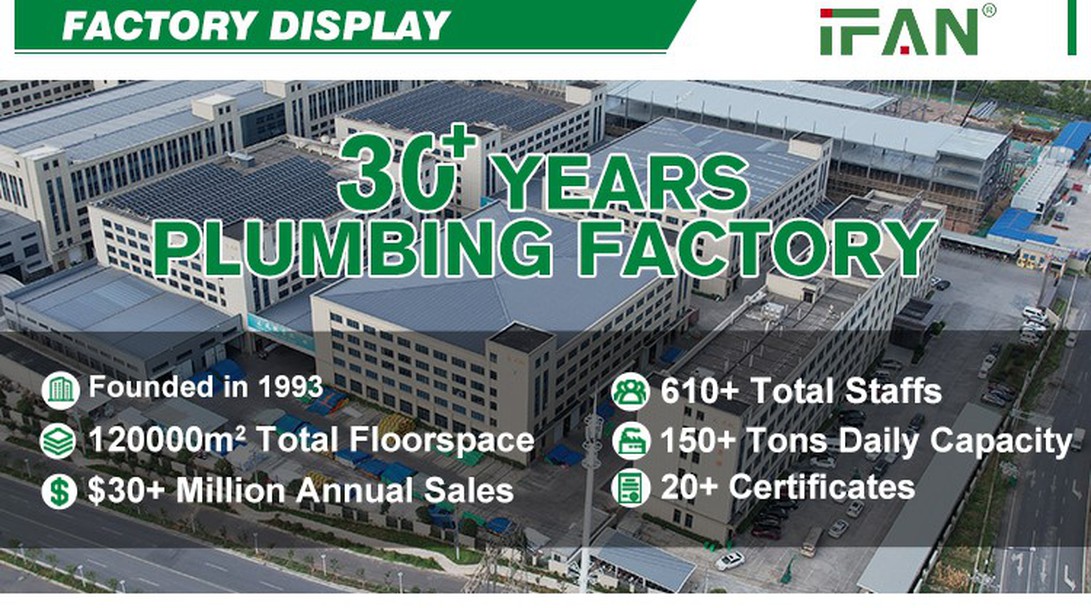
30+Years |
|
Contact Us |
Welcome to contact IFAN, we are online 24 hours a day to answer your questions!
Introduction to HDPE Pipe Fittings
HDPE (High-Density Polyethylene) pipe fittings are widely used in modern water distribution networks, especially in underground pipeline systems. These fittings-including elbows, tees, couplings, and reducers-are designed to connect HDPE pipes and ensure stable water flow under various conditions. Underground water systems require materials that can withstand soil pressure, moisture, temperature variation, and long-term mechanical stress. Because of these demanding requirements, engineers often evaluate whether HDPE pipe fittings are truly ideal for such applications. Their material properties, installation methods, and long-term performance provide strong evidence for their suitability in underground environments.
Resistance to Soil and Environmental Conditions
One of the most important reasons HDPE pipe fittings are suitable for underground water systems is their excellent resistance to soil conditions. Underground pipelines are constantly exposed to moisture, minerals, and sometimes corrosive soil compositions. Unlike metal fittings, which can rust or corrode over time, HDPE does not react with soil components. It remains stable even in wet, acidic, or alkaline environments. This resistance to environmental degradation ensures that underground water systems maintain structural integrity for long periods without requiring frequent repairs or protective coatings.
Flexibility and Ground Movement Adaptability
Underground water systems are often affected by ground movement caused by soil settling, seismic activity, or temperature changes. Rigid materials such as steel or PVC can crack or fail under such stress. HDPE pipe fittings, however, offer high flexibility, allowing them to absorb and adapt to ground movement without breaking. This flexibility helps distribute mechanical stress evenly across the pipeline system. As a result, HDPE systems are less likely to suffer damage in unstable soil conditions, making them highly reliable for underground installation.
Leak-Free Fusion Joint System
Leak prevention is a critical factor in underground water systems because repairs are often expensive and disruptive. HDPE pipe fittings use heat fusion technology, such as butt fusion or electrofusion, to create permanent and seamless joints. These fusion connections eliminate the need for mechanical seals or gaskets that may degrade over time. Once fused, the pipe and fitting become a single continuous structure, significantly reducing the risk of leakage. This feature is especially valuable in underground systems, where detecting and repairing leaks can be difficult and costly.
Corrosion and Chemical Resistance
Underground environments often expose piping systems to corrosive substances found in soil and groundwater. Traditional metal fittings are highly vulnerable to corrosion, which can lead to leaks and system failure over time. HDPE pipe fittings, on the other hand, are chemically inert and do not rust or corrode. They can also resist a wide range of chemicals commonly found in soil, including salts and mild acids. This strong resistance ensures long-term durability and reduces the need for protective coatings or cathodic protection systems, lowering overall maintenance requirements.
Long Service Life in Buried Applications
Durability is a key requirement for underground water systems, where pipe replacement is difficult and costly. HDPE pipe fittings are known for their long service life, often exceeding 50 years under proper conditions. Their resistance to corrosion, abrasion, and environmental stress allows them to maintain performance over decades. Unlike some materials that degrade when buried underground, HDPE remains stable and functional throughout its lifecycle. This long-term reliability makes it a preferred choice for municipal water networks and large-scale infrastructure projects.
Easy Installation and Reduced Construction Costs
Installing underground piping systems can be complex and expensive. HDPE pipe fittings help reduce installation costs due to their lightweight nature and simple fusion-based connection methods. They do not require heavy machinery for handling or complex welding procedures. Instead, fusion welding creates strong, reliable joints with minimal equipment. Additionally, HDPE pipes can be supplied in long continuous lengths, reducing the number of joints required underground. Fewer joints mean fewer potential failure points, improving system reliability and reducing construction and maintenance costs.
Resistance to Internal Pressure and External Load
Underground water systems must withstand both internal water pressure and external soil load. HDPE pipe fittings are designed to handle these dual stresses effectively. Their flexibility allows them to distribute external pressure evenly, while their structural strength ensures they can maintain internal flow pressure without deformation. This balance of strength and flexibility makes HDPE particularly suitable for buried applications where both load types are constantly present.