
HDPE Electrofusion Fitting Ensures Leakproof Pipe Connections
Oct 27, 2026

| Product Name | HDPE Electrofusion Fitting |
| Size | 50-630mm |
| Color | Black Color Or Customized |
| Connection | Electrofusion |
| MOQ | 100PCS |
| Sample | Sample Free |
| Contact |
Understanding HDPE Electrofusion Technology
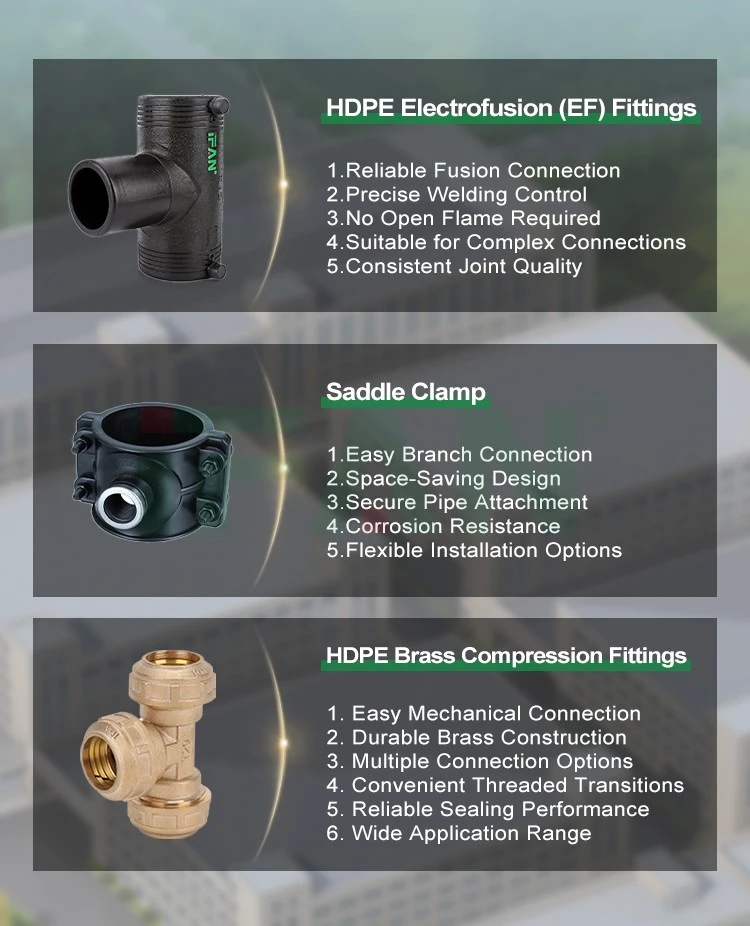
High-density polyethylene (HDPE) piping is widely used in water distribution, gas supply, industrial fluid transportation, and underground infrastructure. In these applications, the quality of each pipe connection directly affects the integrity of the entire pipeline. HDPE electrofusion fittings provide a specialized joining method that creates a fused connection between compatible polyethylene pipes and fittings through controlled electrical heating.
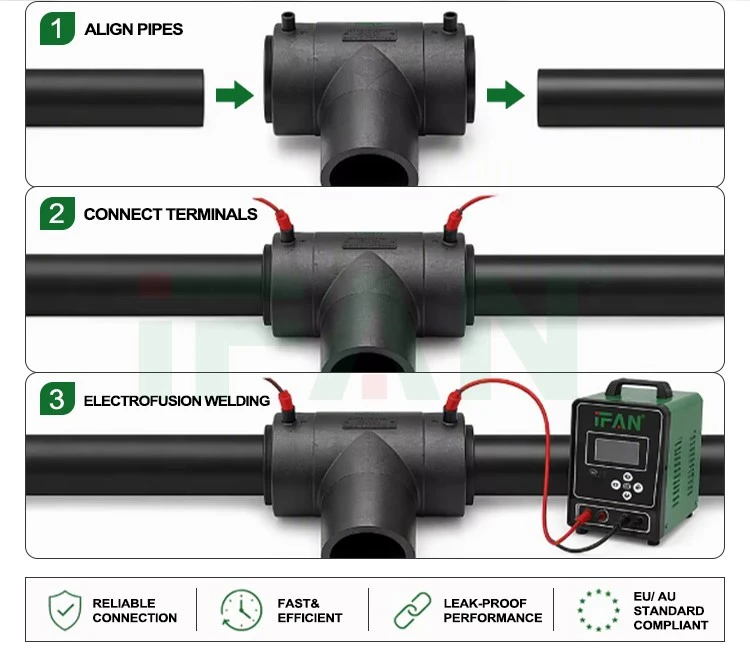
An electrofusion fitting contains an embedded resistance wire within its fusion zone. When an approved electrofusion control unit supplies electrical energy, the wire generates heat and raises the temperature of the surrounding polyethylene. The material softens and melts at the interface, allowing the pipe surface and fitting material to fuse together. After the joint cools under the specified conditions, the connection forms an integrated structure.
Unlike mechanical connections that depend on separate sealing rings or threaded interfaces, electrofusion joining creates a bond between compatible polymer surfaces. However, a leakproof result depends on more than the fitting itself. Correct preparation, accurate alignment, controlled fusion parameters, and adequate cooling are all essential to achieving a properly sealed connection.
Creating a Continuous Fusion Interface
The main principle behind electrofusion is the formation of a continuous bond between the fitting's inner surface and the prepared outer surface of the pipe. During the fusion cycle, heat softens the polyethylene at the interface, allowing the materials to combine under the conditions established by the fitting design.
For the joint to seal correctly, the fusion zone must develop consistently around the pipe circumference. Contamination, surface oxidation, gaps, or uneven contact can interfere with the process and create potential leakage paths. Even if the fitting appears correctly positioned from the outside, an improperly fused interface may contain defects that are not immediately visible.
The fitting and pipe must therefore be compatible in material, dimensions, and intended application. Installers should verify the pipe outside diameter, fitting specifications, pressure classification, and manufacturer's fusion requirements before beginning work.
A properly executed fusion cycle produces a joint designed to function as a continuous connection rather than a simple contact between two separate surfaces. Maintaining the integrity of this interface is central to preventing fluid from escaping under normal operating pressure.
Preparing Pipe Surfaces Before Fusion
Surface preparation is one of the most important steps in establishing a reliable electrofusion joint. Polyethylene pipe surfaces may contain oxidation, dust, moisture, grease, or other contaminants that prevent direct contact between clean polymer surfaces. These substances can disrupt the fusion process and compromise sealing performance.
The pipe end should first be inspected for damage, ovality, and dimensional irregularities. Installers then prepare the designated fusion area according to the fitting manufacturer's instructions, typically by removing the required outer surface layer with an appropriate mechanical scraping tool. This operation removes the affected surface and exposes material suitable for fusion.
After scraping, the prepared area must be protected from contamination. Approved cleaning products and procedures should be used where specified, and the surface should not be touched unnecessarily. Ordinary handling can transfer oils or dirt back onto the prepared pipe.
Preparation dimensions must also be correct. Scraping too little may leave unsuitable material behind, while excessive material removal can affect pipe dimensions and fitting engagement. Following the specified preparation procedure helps establish consistent contact between the pipe and fitting throughout the intended fusion zone.
Ensuring Accurate Alignment and Secure Positioning
Correct alignment helps maintain uniform contact between the pipe and fitting during heating and cooling. If the pipe enters the fitting at an angle or shifts during fusion, the gap between the joining surfaces may become uneven. This can affect heat transfer and create areas where the materials do not fuse as intended.
Before starting the fusion cycle, installers should mark the insertion depth and position the fitting according to the manufacturer's requirements. Suitable clamps or alignment devices should be used when necessary to prevent movement. The pipe should remain properly supported so that its weight does not place unnecessary stress on the joint.
Pipe ovality must also be considered. A pipe that is excessively out of round may not fit evenly within the fitting, potentially affecting the fusion interface. Approved rounding tools may be required in accordance with the installation procedure.
Accurate positioning is particularly important in confined trenches, utility chambers, and installations involving multiple fittings. Taking time to confirm alignment before applying electrical energy reduces the likelihood of defects that could otherwise require the connection to be cut out and replaced.
Controlling the Electrofusion Cycle
Electrofusion fittings require a defined heating cycle based on their design and operating specifications. The control unit supplies electrical energy to the embedded resistance wire, generating the heat needed to fuse the adjoining polyethylene surfaces. Fusion time and electrical parameters must match the fitting manufacturer's instructions.
Many fittings include a barcode or other identification system that allows a compatible control unit to retrieve the prescribed fusion settings. Where manual entry is permitted, the operator must verify the specified parameters carefully. Incorrect settings may result in insufficient fusion or excessive heating.
Environmental conditions can also influence installation procedures. Low temperatures, moisture, and wind exposure may require additional precautions under the manufacturer's guidance. The pipe and fitting must remain within the specified conditions throughout the joining process.
Once the cycle begins, the operator should not interrupt the process or disturb the connection unless the equipment instructions require an emergency response. The control unit's completion indicator and any recorded fault information should be reviewed before the next step. A completed cycle indicates that the programmed sequence has finished, but it does not independently prove that the joint is free from defects.
Allowing Sufficient Cooling Time
Cooling is an essential stage of electrofusion joining. After electrical heating stops, the polyethylene needs sufficient time to solidify and develop the intended joint structure. Moving the pipe, removing clamps too early, or applying bending forces during this period can disturb the fusion interface.
The required cooling period depends on the fitting design, dimensions, ambient conditions, and manufacturer specifications. Installers should follow the stated cooling time rather than estimating readiness from the external appearance of the fitting.
During cooling, the joint should remain properly aligned and free from unnecessary mechanical loads. Pipe supports and clamps should be retained for the prescribed period. Where several joints are being installed in sequence, work planning should account for cooling requirements so that completed connections are not disturbed by adjacent operations.
After cooling is complete, the joint should undergo the inspection and testing procedures required for the pipeline application. These may include visual examination, review of fusion records, and an appropriate pressure or leak test. Testing must follow the applicable standards and project specifications.
Quality Inspection and Leak Prevention
A leakproof connection depends on a controlled installation process and systematic quality checks. Before testing, inspectors should examine the fitting for visible damage, displacement, abnormal deformation, or other signs of an unsuccessful fusion cycle. Fusion indicators, where provided, should be interpreted according to the manufacturer's instructions rather than treated as conclusive proof of joint integrity.
Installation records should identify the fitting, fusion equipment, operating parameters, and relevant inspection results. Recording this information makes it easier to investigate defects and verify that approved procedures were followed.
Pressure testing provides additional evidence of pipeline integrity when performed under the appropriate procedure. Test pressure, duration, temperature conditions, and acceptance criteria must follow the relevant standards and project requirements. A test should never exceed the allowable limits of the pipe system or its components.
Conclusion
HDPE electrofusion fittings create leak-resistant pipe connections by using controlled electrical heating to fuse compatible polyethylene surfaces. Successful joining depends on clean surface preparation, correct alignment, suitable fusion parameters, adequate cooling, and systematic inspection. By following manufacturer instructions and applicable pipeline standards at every stage, installers can establish consistent fusion joints and reduce the risk of leakage in HDPE piping systems.