
How HDPE Electrofusion Fitting Reduces Leakage Risks
Oct 27, 2026

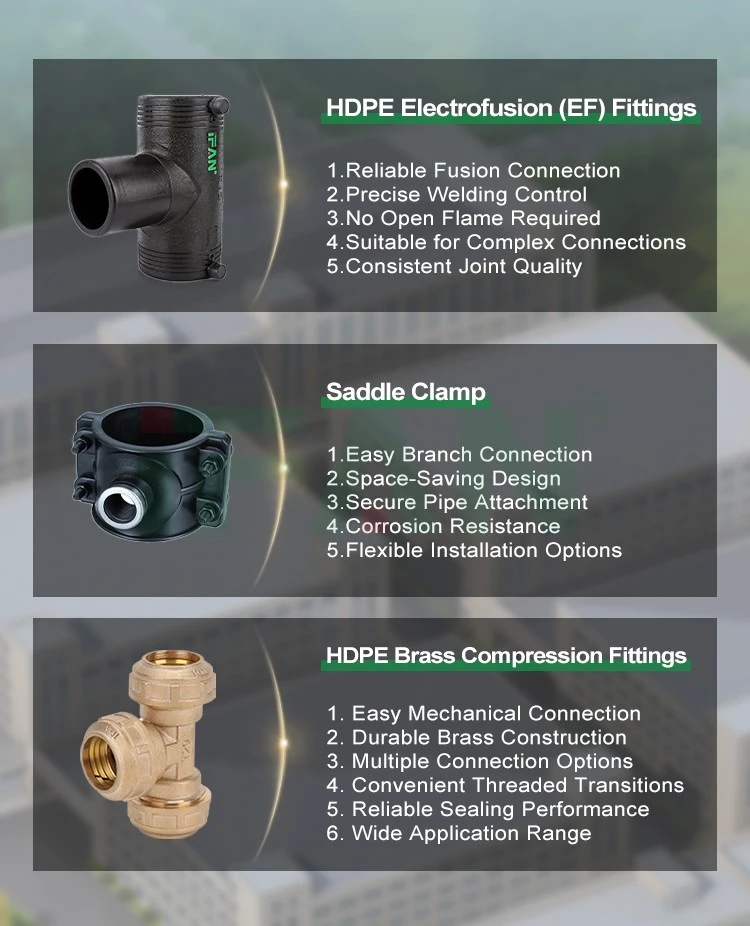
| Product Name | HDPE Electrofusion Fitting |
| Size | 50-630mm |
| Color | Black Color Or Customized |
| Connection | Electrofusion |
| MOQ | 100PCS |
| Sample | Sample Free |
| Contact |
Understanding the Causes of Leakage in HDPE Pipelines
Leakage is a significant concern in water distribution, gas transportation, and industrial piping systems. Even when the pipe material is correctly selected, a poorly constructed connection can become a weak point in the network. Small installation defects may remain unnoticed during construction and become apparent only after the pipeline is pressurized or placed into regular service.
High-density polyethylene (HDPE) electrofusion fittings are designed to join compatible polyethylene pipes through a controlled heating process. Unlike conventional mechanical connections that rely on separate sealing components, electrofusion creates a fused interface between the pipe and fitting. When this process is completed correctly, the joining surfaces form an integrated connection intended to resist fluid leakage under the specified operating conditions.
The effectiveness of this method depends on several factors, including surface preparation, fitting compatibility, pipe alignment, fusion parameters, and cooling time. Understanding how each factor affects joint integrity helps installers identify potential problems before the pipeline enters service. Leakage prevention is not achieved by the fitting alone; it results from combining appropriate product selection with a controlled installation procedure.
Creating a Fused Interface Between Pipe and Fitting
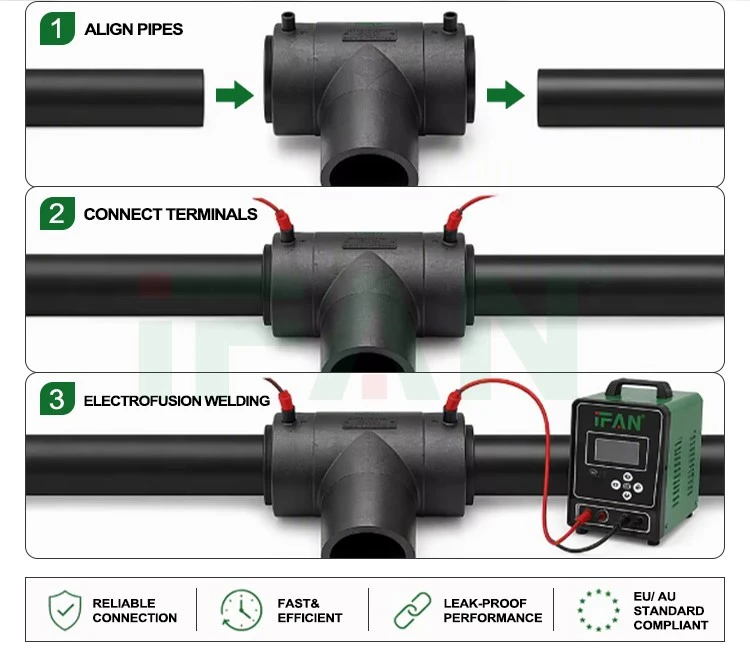
The primary mechanism behind electrofusion is the controlled melting of compatible polyethylene surfaces. An electrofusion fitting contains an embedded resistance wire that generates heat when connected to a suitable control unit. This heat raises the temperature of the material around the wire, allowing the fitting's inner surface and the prepared pipe surface to fuse together.
As the polyethylene cools, the fused region develops into a continuous joint between the two components. Unlike a conventional connection that depends on a gasket remaining compressed against separate surfaces, the electrofusion joint relies on the bond formed between the polymer materials.
This structure helps reduce leakage paths associated with loose mechanical connections or improperly seated sealing rings. However, the fusion interface must be formed under the specified conditions. Inadequate heating may prevent sufficient fusion, while incorrect parameters or movement during cooling may compromise the connection.
For this reason, installers must use fittings compatible with the pipe material and dimensions. They should also follow the manufacturer's instructions for electrical settings, preparation requirements, and cooling periods. A correctly controlled fusion process is central to producing a joint that meets the pipeline's sealing requirements.
Eliminating Contamination at the Jointing Surface
Contamination is one of the most common threats to electrofusion joint quality. Dust, grease, moisture, and surface oxidation can interfere with direct contact between the pipe and fitting materials. When these substances remain in the fusion zone, they may prevent the polyethylene surfaces from bonding consistently.
To reduce this risk, installers must prepare the pipe surface according to the specified procedure. This usually involves removing a controlled outer layer with an approved mechanical scraping tool. The preparation area should cover the required fusion zone and extend far enough to accommodate the fitting's insertion depth.
After scraping, the prepared surface must be protected from contamination. Workers should avoid touching the fusion area unnecessarily and should use approved cleaning products where the manufacturer requires them. The fitting should remain protected in its original packaging until it is ready for use.
Skipping these steps to save time can produce defects that are difficult to identify through an external visual inspection. A connection may appear correctly assembled while containing an incomplete bond beneath the fitting. Consistent surface preparation reduces this uncertainty and helps establish the conditions needed for reliable sealing.
Maintaining Correct Pipe Alignment and Insertion Depth
The physical relationship between the pipe and fitting influences how heat is distributed throughout the fusion zone. If the pipe is inserted too far, not far enough, or at an angle, the joining surfaces may not overlap as intended. Uneven contact can affect the formation of the fused interface and create potential leakage paths.
Before fusion begins, installers should mark the required insertion depth and check the pipe's outside diameter and condition. The fitting must slide into position according to the manufacturer's requirements without excessive force or an unsuitable gap.
Clamps and alignment tools may be necessary to keep the assembly stable. These devices help prevent the pipe from shifting when the fusion cycle begins or while the joint cools. Pipe ovality should also be checked because a significantly deformed pipe may not contact the fitting evenly.
Correct positioning is particularly important in underground installations, where connections may be difficult to access after backfilling. Confirming alignment before applying electrical energy reduces the likelihood of having to remove and replace a defective joint later.
Controlling Fusion Parameters to Avoid Joint Defects
Electrofusion fittings require specific electrical parameters and heating times. These values are determined by the fitting design and must be followed using a compatible control unit. Applying insufficient energy may result in incomplete fusion, while excessive heating can damage the material or create an unsuitable joint structure.
Many modern fittings include a barcode that allows compatible equipment to retrieve the prescribed fusion settings. Before starting the cycle, the operator should verify the fitting identification, equipment connections, and preparation of the joint. Any error or interruption reported by the control unit must be handled according to the manufacturer's instructions.
Environmental conditions can also influence the installation process. Temperature, moisture, and exposure to wind may require additional precautions depending on the product specifications and applicable standards.
A completed electrical cycle does not automatically confirm that the joint is defect-free. The equipment can report that the programmed sequence has finished, but it cannot necessarily detect every preparation error, alignment problem, or material defect. Quality assurance must therefore include proper installation practices, inspection, and the testing required for the application.
Allowing the Joint to Cool Without Disturbance
Cooling is an essential part of electrofusion joining. After the heating cycle ends, the polyethylene needs time to solidify and develop the intended connection. If the pipe moves or external forces are applied too early, the fusion interface may be disturbed before it has stabilized.
The required cooling period depends on the fitting's dimensions, design, and manufacturer specifications. Installers should follow the stated period rather than relying on the external temperature or appearance of the fitting.
During cooling, the joint should remain properly aligned and supported. Clamps should not be removed before the specified time, and the connected pipe should not be bent or subjected to unnecessary loading. In busy construction areas, workers should coordinate nearby activities to prevent accidental movement of recently fused joints.
Following the prescribed cooling procedure helps reduce defects associated with premature handling. It also establishes a consistent installation sequence across the project, making it easier for supervisors to verify that each connection has received the required treatment.
Testing and Inspecting Completed Connections
Leakage prevention requires verification after installation. Once the joint has cooled, it should be examined for visible damage, incorrect positioning, or other signs of an installation problem. Fusion records should be reviewed where available, including any error messages generated by the control unit.
The pipeline should then undergo the inspection and pressure or leak testing required by the applicable standards and project specifications. Test pressure, duration, and acceptance criteria vary according to the pipeline's purpose and operating conditions.
Testing must be performed using an approved procedure that protects workers and stays within the permitted limits of the pipe system. For critical applications, additional quality checks or documented inspection procedures may be required.