
Underground Water Networks Need HDPE Electrofusion Fitting
Oct 27, 2026

| Product Name | HDPE Electrofusion Fitting |
| Size | 50-630mm |
| Color | Black Color Or Customized |
| Connection | Electrofusion |
| MOQ | 100PCS |
| Sample | Sample Free |
| Contact |
The Growing Role of HDPE Connections in Underground Water Infrastructure
Underground water networks form an essential part of modern infrastructure, delivering clean water to homes, commercial buildings, agricultural facilities, and industrial sites. Much of this network remains hidden beneath roads, sidewalks, and landscaped areas, making the quality of pipe connections a critical consideration during construction. Once a pipeline is buried, locating and repairing a defective joint can require excavation, traffic management, and temporary service interruptions.
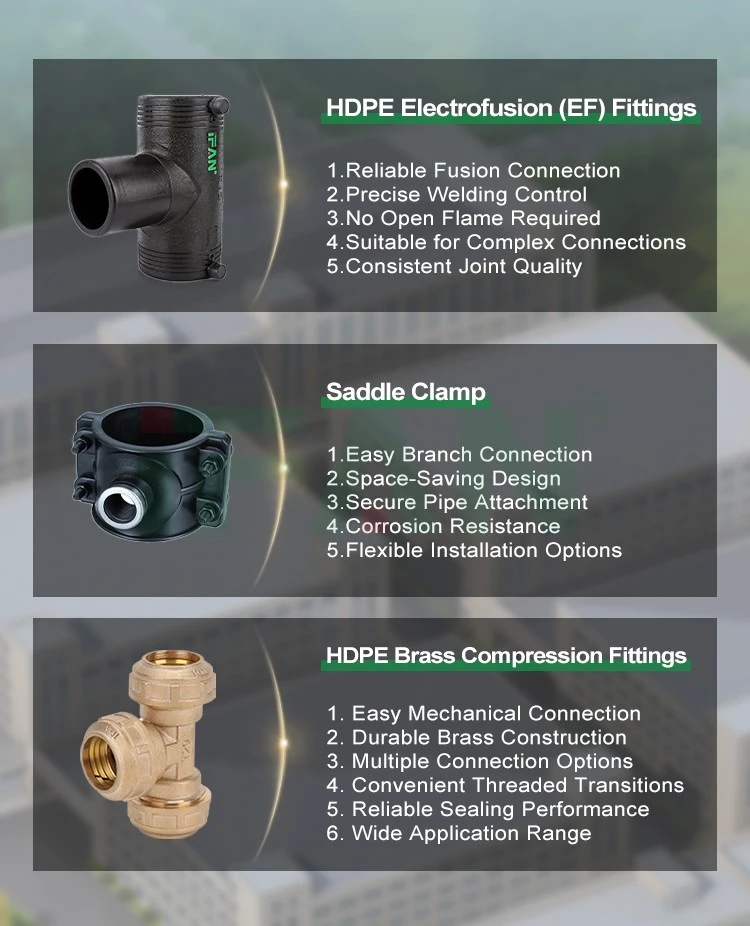
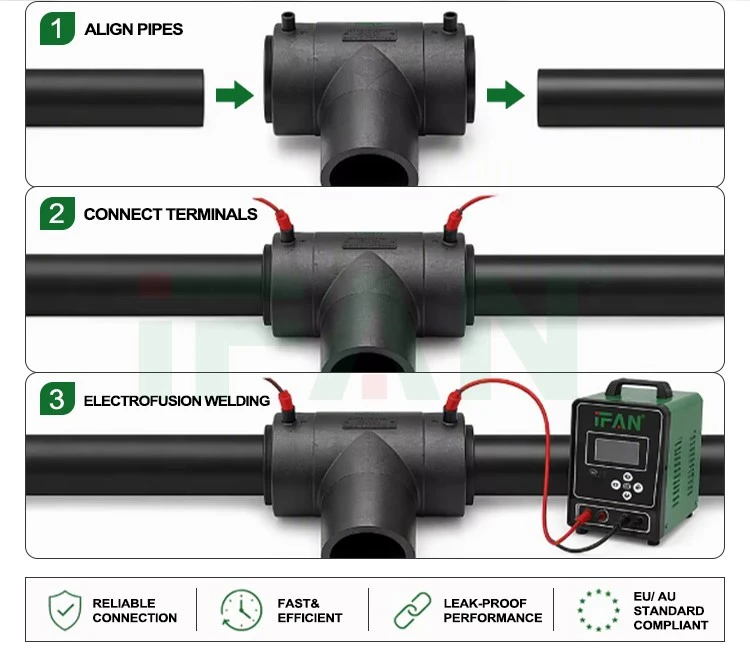
High-density polyethylene (HDPE) electrofusion fittings provide a specialized method for joining compatible polyethylene pipes in underground water systems. Each fitting contains an embedded electrical heating element that generates controlled heat during the fusion process. This heat softens the adjoining pipe and fitting surfaces, allowing them to fuse together as the joint cools.
The resulting connection is designed to form an integrated section of the pipeline rather than relying solely on a separate mechanical seal. For underground applications, this joining method offers engineers a practical way to connect straight pipe sections, create branches, change direction, and carry out repairs. Correct material selection and installation remain essential to achieving the required pipeline performance.
Creating Secure Connections Below Ground
Buried water pipelines operate under conditions that can change throughout their service life. Internal pressure varies with water demand, pump operation, and network configuration, while the surrounding soil may experience settlement, moisture changes, or movement caused by nearby construction.
A pipeline joint must accommodate the loads anticipated in the system without allowing water to escape. HDPE electrofusion fittings create a fused interface between compatible polyethylene surfaces when the joining procedure is performed correctly. The quality of this interface depends on adequate surface preparation, proper alignment, controlled heating, and sufficient cooling time.
Unlike a connection that depends entirely on a gasket compressed between separate components, an electrofusion joint relies on the fusion of the polymer surfaces. This makes process control especially important. Contaminated surfaces, incomplete insertion, or movement during cooling may prevent the joint from developing its intended structure.
Before burial, the completed connections should undergo the inspections and testing required by the project specifications. Verifying the installation while the joints remain accessible makes it easier to identify problems before backfilling begins.
Resistance to Soil Conditions and External Corrosion
Underground water infrastructure is exposed to soil containing moisture, dissolved salts, minerals, and substances that may contribute to the corrosion of metallic components. In some locations, soil chemistry can be particularly aggressive, requiring additional consideration when selecting materials for buried connections.
HDPE electrofusion fittings are manufactured from polyethylene, which does not rust through the electrochemical process associated with iron and steel. This property makes them suitable for many underground environments where resistance to conventional corrosion is an important design requirement.
However, resistance to rust does not mean that every underground condition is harmless. Mechanical damage, unsuitable chemicals, excessive temperatures, and installation stresses can still affect polyethylene components. The pipe and fitting must also be compatible with the water being transported and with any substances encountered during installation or maintenance.
Engineers should evaluate the expected soil conditions alongside the pipeline's pressure rating, burial depth, and external loading. Appropriate bedding and backfilling practices are necessary to prevent sharp objects, uneven support, or concentrated loads from damaging the pipe system.
Adapting to Complex Network Layouts
Underground water networks rarely follow a single straight route. They must pass around existing utilities, cross roads, connect to buildings, and branch toward individual service areas. These changes require fittings that match the geometry of the pipeline while maintaining the required flow path.
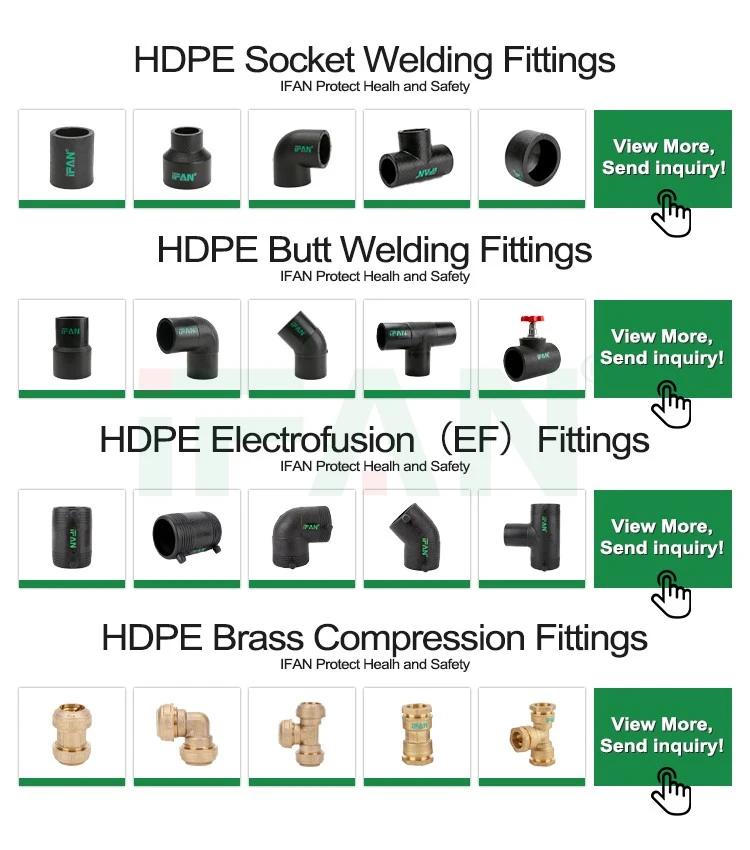
HDPE electrofusion fittings are available in configurations such as couplers, elbows, tees, reducers, and other application-specific designs. Couplers connect compatible pipe ends, elbows change the direction of a pipeline, and tees provide branch connections. Reducers allow transitions between specified pipe diameters when the system design calls for them.
Using the appropriate fitting helps installers assemble the network according to approved drawings. Each connection must be checked for dimensional compatibility and alignment before fusion begins. Pipe ends should not be forced into position to compensate for incorrect measurements or poorly prepared trench layouts.
For networks containing numerous branches, contractors can organize fittings by installation section and connection type. This preparation reduces confusion on site and helps ensure that the correct component is available at each junction.
Maintaining Water Quality in Distribution Systems
Water quality is an important consideration when selecting materials for drinking water infrastructure. Components that contact potable water must meet applicable regulatory requirements and should not introduce unacceptable contaminants into the supply.
HDPE electrofusion fittings can be used in drinking water networks when the specific products, materials, and installation procedures meet the relevant potable-water standards. Engineers should verify product certifications and manufacturer documentation rather than assuming that every polyethylene fitting is suitable for drinking water.
Clean handling is also essential during construction. Soil, grease, standing water, and other contaminants should be kept away from prepared fusion surfaces. Protective packaging should remain in place until the fitting is required, and installers should use the cleaning and preparation methods specified by the manufacturer.
After the pipeline has been assembled, the system must be flushed, disinfected, and tested where required by the applicable water authority and project specifications. Proper joining is only one part of the process needed to place a new water network into service safely.
Simplifying Repairs and Network Extensions
Water networks often require modifications as communities grow or existing infrastructure reaches the end of its planned service period. New branches may be needed for residential developments, industrial properties, or changes in municipal distribution arrangements. Repairs may also become necessary when a pipe section is damaged by excavation or ground movement.
Electrofusion fittings can be used for certain repairs and extensions when the existing pipe material, dimensions, condition, and operating requirements are suitable. A compatible coupling can connect a replacement pipe section to prepared pipe ends, while tees and other fittings can support approved network modifications.
Repair planning must begin with identifying the pipe material and confirming the location and extent of the damage. The affected section should be isolated, depressurized, and prepared according to the required safety procedures before cutting or joining work begins.
Where the existing pipe is deformed, contaminated, or unsuitable for fusion, additional preparation or a different repair method may be necessary. Installers should never assume that a fitting can compensate for damaged pipe surfaces or incorrect dimensions.
Installation Quality and Long-Term Network Performance
The performance of an underground water network depends on the consistency of its construction. Even a correctly specified fitting can fail to provide the intended connection if installation procedures are not followed.
Before fusion, workers should inspect the pipe ends, confirm insertion depth, remove the specified surface layer, and secure the assembly against movement. The fusion control unit must use the correct parameters for the fitting, and the joint must remain undisturbed throughout the required cooling period.
After cooling, the connection should be examined and included in the required pressure or leak testing procedures. Test conditions must comply with the applicable standards and should not exceed the permitted limits of the pipeline components.
Accurate records of fitting identification, fusion settings, installation locations, and inspection results help contractors manage quality across large projects. These records are especially useful when future repairs or network extensions are required.