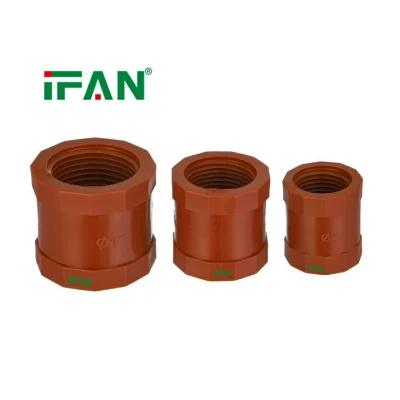
Secure Tube Connections Using Brass compression Fittings
Sep 21, 2026

|
Product Name |
Brass compression Fittings |
|
Color |
Yellow Color |
|
Size |
15-35mm |
|
Brand |
IFAN or Customized |
|
OEM |
Support |
|
Sample |
Free |
|
Experience |
30+Years |
|
Contact Us |
Welcome to contact IFAN, we are online 24 hours a day to answer your questions!
Creating Stable Tube Connections
A reliable tube connection plays an important role in plumbing, instrumentation, and fluid distribution systems. Loose joints, poor alignment, and improper assembly can create leakage risks and interrupt normal operation. Brass compression fittings offer a mechanical connection method that helps join compatible tubes without welding or soldering.
The connection relies on several coordinated components, including the fitting body, compression ring, and nut. When the nut is tightened correctly, the ring grips the tube and creates contact within the fitting. This arrangement supports a stable connection when the components match the tube specifications and installation requirements.
Rather than depending on a single feature, connection security comes from the interaction between component design, tube preparation, and assembly accuracy. Understanding these factors helps installers establish suitable connections for different piping applications.
Compression Rings Improve Tube Grip
The compression ring is a central component in the connection process. During assembly, tightening the nut pushes the ring into the fitting structure. The ring then engages with the tube surface, helping hold the tube in position.
This mechanical grip reduces the likelihood of tube movement when the system operates under suitable conditions. The exact gripping mechanism depends on the fitting design and the tube material. Metal and plastic tubes may require different assembly methods or additional support components.
Correct ring placement is essential for proper performance. If the ring is missing, incorrectly positioned, or damaged, the connection may not function as intended. Installers should inspect each component before assembly and follow the manufacturer's instructions.
A secure grip requires compatibility between the ring, fitting body, and tube dimensions. Selecting matching components helps maintain the intended connection structure.
Proper Tube Preparation Supports Connection Security
Tube preparation directly influences the quality of a compression connection. Before installation, the tube should have a clean, appropriately shaped end. Cuts should be made according to the manufacturer's recommendations, avoiding unnecessary deformation or surface damage.
An uneven tube end can interfere with component positioning. Dirt, metal particles, or other contaminants may also affect contact between the tube and fitting components. Cleaning the tube before assembly helps maintain suitable installation conditions.
Different tube materials have different preparation requirements. Some plastic tubes may need support inserts to prevent excessive deformation during compression. Installers should verify whether additional components are required for the selected tube.
Careful preparation provides a consistent foundation for assembly. It also helps reduce installation errors that could affect the connection's ability to maintain its intended position.
Correct Tightening Maintains Connection Stability
The compression nut must be tightened according to the fitting manufacturer's specified procedure. Appropriate tightening allows the compression ring to engage the tube without applying unnecessary force.
Excessive tightening may deform the tube or damage the compression components. Insufficient tightening may prevent the ring from establishing the required contact. Either condition can affect the connection's sealing and mechanical performance.
Installers should use the recommended tightening method and tools where specified. The procedure may differ between fitting designs and tube materials. A method suitable for one product should not automatically be applied to another.
After assembly, the connection should be inspected for alignment and visible signs of leakage. If a problem occurs, the installer should identify its cause before making adjustments.
Applications Requiring Reliable Tube Connections
Brass compression fittings are used in selected water supply, heating, instrumentation, and equipment connection systems. Their suitability depends on the tube material, pressure, temperature, and other operating conditions.
In plumbing installations, compression connections can simplify the joining of compatible tubes in accessible locations. Instrumentation systems may require accurate assembly because small connection problems can affect fluid delivery or measurement equipment.
Each application requires appropriate component selection. The fitting must match the tube dimensions and the fluid conditions specified by the manufacturer. Where vibration, pressure fluctuations, or chemical exposure exist, additional evaluation may be necessary.
Conclusion
Brass compression fittings establish tube connections through the coordinated action of the fitting body, compression ring, and nut. Their connection security depends on compatible materials, accurate tube preparation, and correct tightening procedures.
Installers should follow product-specific instructions and verify the fitting's suitability for the intended application. When these requirements are addressed, compression fittings can provide a practical method for creating mechanically secure tube connections.