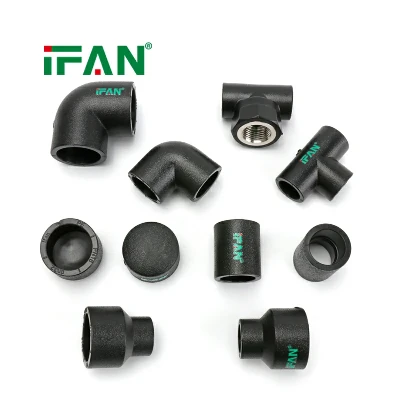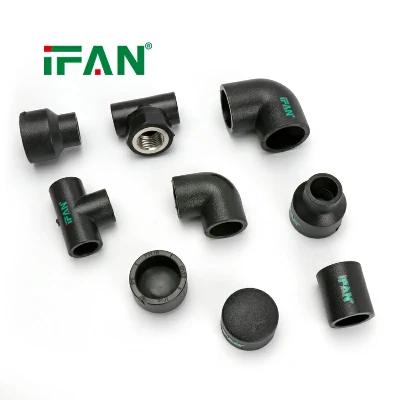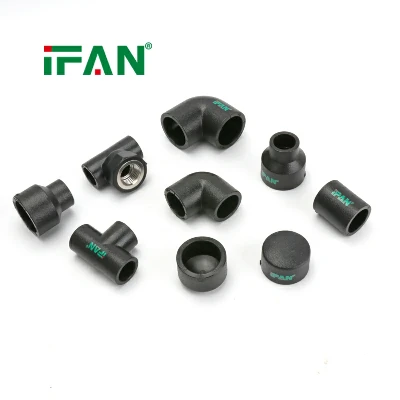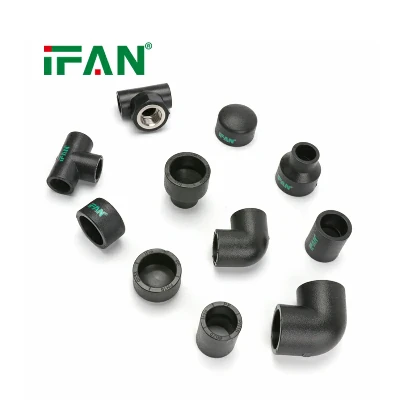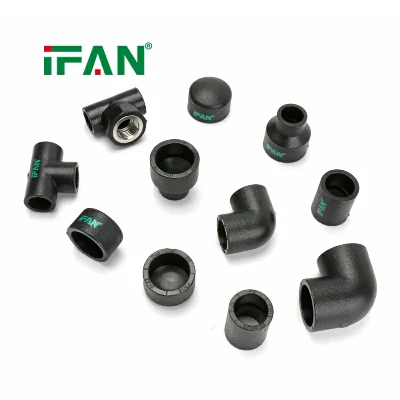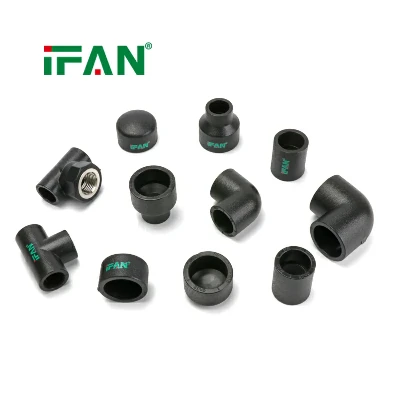

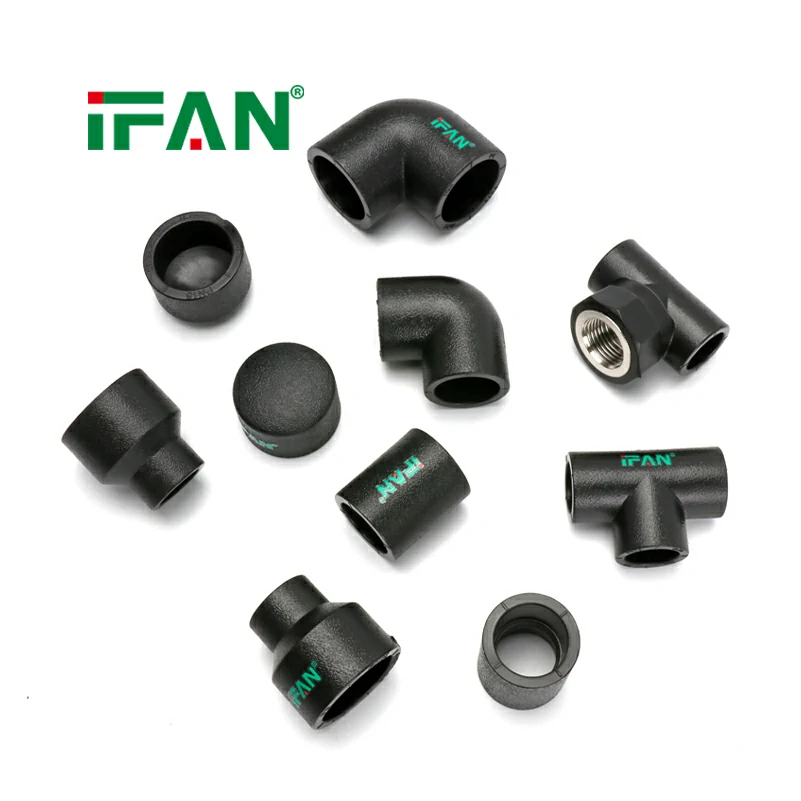

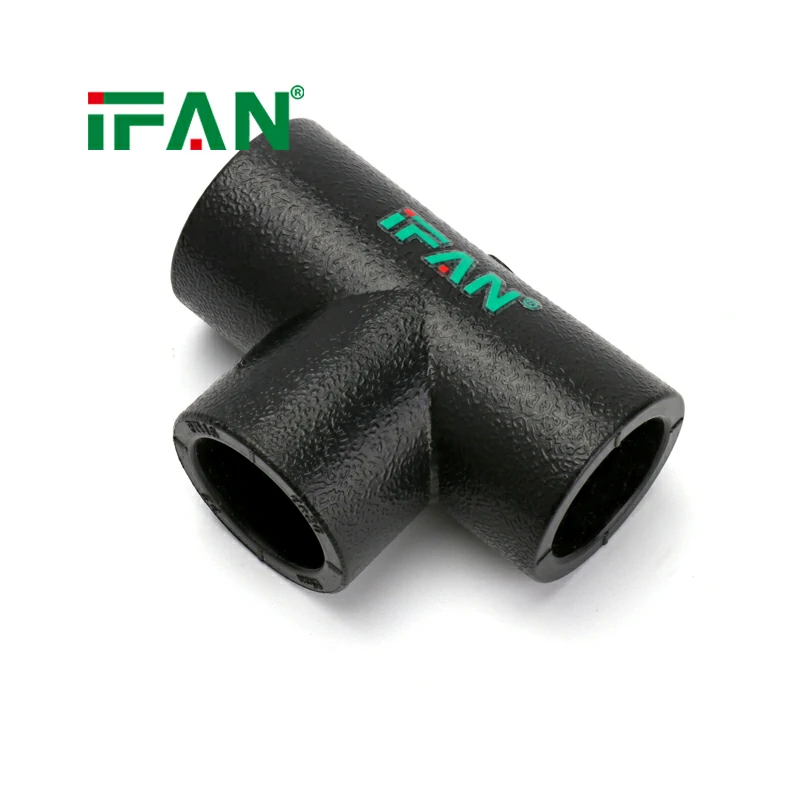
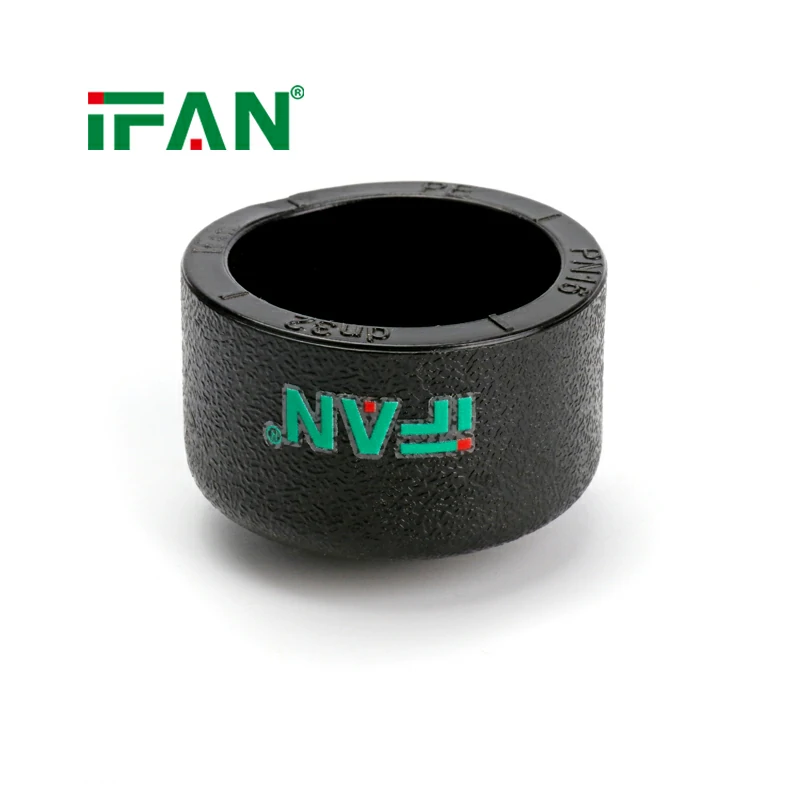
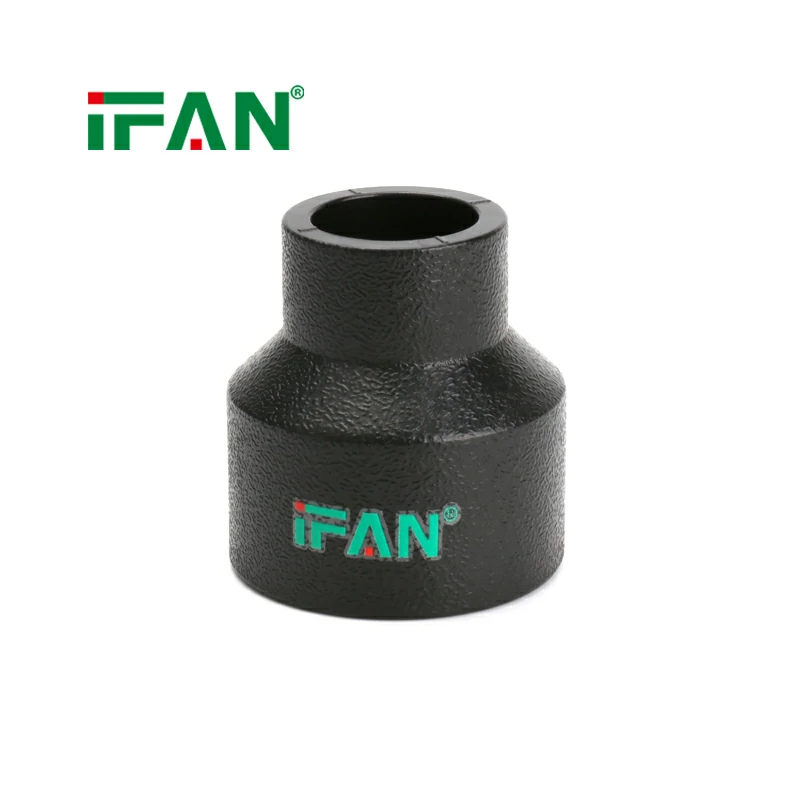
HDPE Socket Welding Fittings Simplify Pipeline Repairs
Brand: IFAN
Materials:PE
Size:20-110mm
Sample: Free Sample
Service: OEM&ODM
- Fast Delievery
- Quality Assurance
- 24/7 Customer Service
Product Introduction
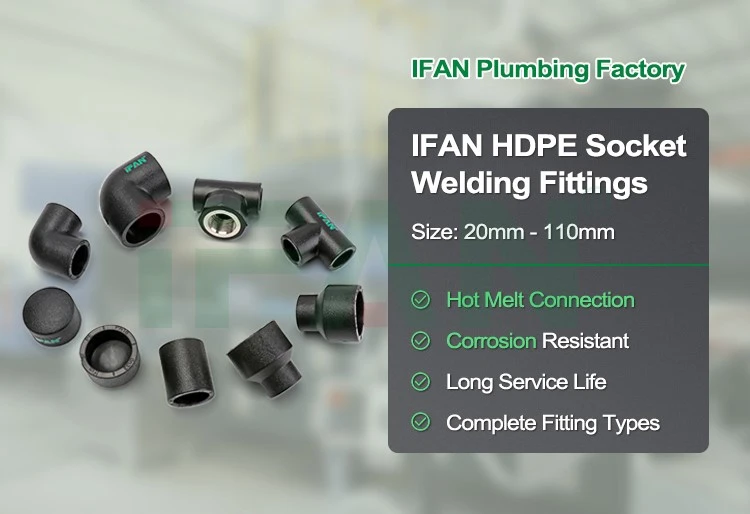
| Product Name | HDPE Socket Welding Fittings |
| Size | 20-110mm |
| Color | Black Color Or Customized |
| Connection | Welding |
| MOQ | 100PCS |
| Sample | Sample Free |
| Contact |
Understanding the Role of Socket Welding Fittings in Repairs
Pipeline repairs require accurate fault identification, appropriate replacement components, and a clear plan for restoring the affected section. In HDPE piping systems, the repair process may involve replacing a damaged fitting, removing a leaking connection, or reconnecting a pipe after a section has been cut out. HDPE socket welding fittings provide a defined connection method for compatible polyethylene pipes, allowing repair teams to rebuild sections according to the original system requirements.
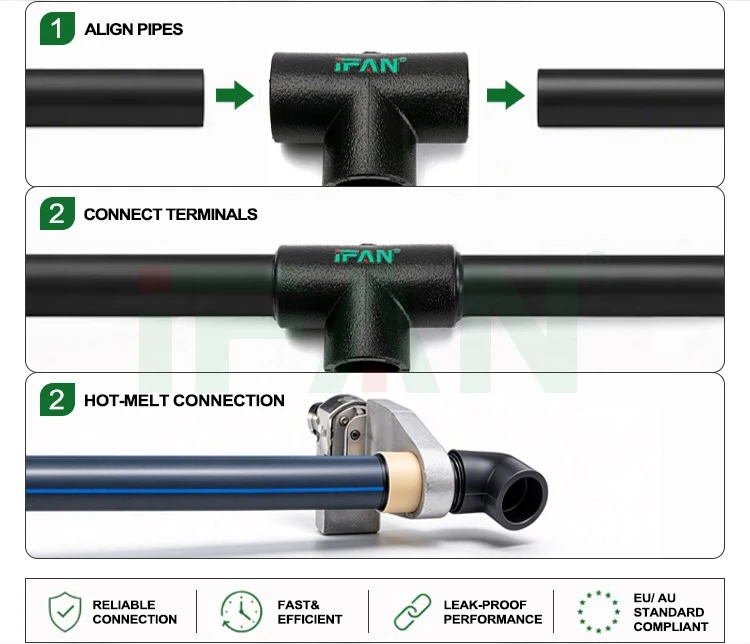
Socket fusion joins the outside surface of a prepared pipe end to the inside surface of a fitting socket through controlled heating. When the components are assembled according to the specified procedure, the softened polyethylene surfaces fuse as they cool. This method can be used when the pipe dimensions, fitting design, and applicable installation requirements are suitable for socket welding.
Successful repairs begin with understanding the cause and location of the problem. A damaged connection may result from incorrect installation, external impact, excessive operating pressure, chemical incompatibility, or movement in the surrounding structure. Identifying the underlying cause helps technicians select the correct repair method rather than replacing a fitting without addressing the conditions that caused the failure.
Identifying the Damaged Section Before Repair
The first repair task is to locate the affected area and determine the extent of the damage. Leakage may originate from the fitting itself, the fusion interface, or an adjacent pipe section. Visual inspection can reveal cracks, deformation, surface damage, or signs of water escaping around a connection, but the actual cause may require further investigation.
Before cutting or dismantling the pipeline, technicians should consult system drawings and identify the pipe material, outside diameter, pressure rating, and fitting specifications. These details determine which replacement components can be used and whether socket fusion is appropriate for the repair.
The affected section must be isolated from the operating system and depressurized according to established safety procedures. Where necessary, the pipe should be drained before work begins. Attempting to repair a pressurized pipeline can create unsafe conditions and prevent the connection from being assembled correctly.
Accurate fault identification also helps define the boundaries of the repair. If damage extends beyond the fitting into the surrounding pipe, replacing only the visible connection may leave a weakened section in service. The repair plan should account for all affected material before new components are installed.
Selecting Compatible Replacement Fittings
Choosing the correct replacement fitting is essential to a successful repair. HDPE socket welding fittings must match the pipe system in terms of dimensions, material compatibility, socket geometry, and applicable operating requirements. A fitting that appears similar to the original component may still be unsuitable if its specifications differ.
Technicians should confirm the pipe outside diameter and identify the required fitting configuration. A coupling may be suitable for reconnecting a straight section, while an elbow or tee may be necessary where the original pipeline changes direction or divides into branches. Reducers should be selected only when the design requires a transition between specified pipe sizes.
The replacement component must also be rated for the system's operating conditions. Pressure, temperature, and transported media should be reviewed before installation. For systems carrying potable water or regulated chemicals, the replacement product must meet the relevant material and approval requirements.
Keeping accurate records of the original components can simplify future repairs. Product markings, installation drawings, and maintenance documentation help technicians identify compatible replacement parts without relying solely on visual comparison.
Preparing the Pipe for a New Connection
Once the repair boundaries have been established, the damaged section can be removed using an appropriate pipe-cutting tool. Cuts should be square and positioned so that the remaining pipe ends provide sufficient material for the required socket insertion depth. Technicians should measure the available space before cutting to avoid creating a gap that cannot be accommodated by the selected fitting arrangement.
Inspect the exposed pipe ends for cracks, deformation, deep scratches, and contamination. Remove loose particles and prepare the joining surfaces according to the manufacturer's instructions. Dirt, oil, moisture, or other foreign substances can interfere with the fusion process and introduce defects into the repaired joint.
The required insertion depth should be marked clearly on each pipe end. This reference helps the technician position the pipe correctly during assembly and avoid excessive or insufficient insertion.
Repair work may take place in trenches, service chambers, equipment rooms, or other restricted locations. Before heating begins, confirm that the fusion tool can be positioned correctly and that there is enough clearance to join the components without disturbing the prepared surfaces.
Reconnecting the Pipeline Through Socket Fusion
The fusion stage must follow the procedure specified for the particular HDPE pipe and fitting system. Technicians use a suitable socket fusion tool with heating attachments matched to the component dimensions. The equipment should be checked for cleanliness and operating temperature before the repair proceeds.
The pipe end and fitting socket are placed on their corresponding heating surfaces for the prescribed period. After heating, the components are removed and joined promptly, with the pipe inserted straight into the socket to the required depth. Unnecessary twisting or movement should be avoided unless explicitly permitted by the approved procedure.
Alignment is particularly important when replacing a fitting between existing pipe sections. If the pipe ends are not properly positioned, forcing them together can introduce stress into the new joint or place additional loads on the surrounding pipeline. Temporary supports may be needed to maintain the intended position during assembly.
After insertion, the connection must remain undisturbed for the specified cooling period. The repair should not be subjected to pressure, bending, or other loads before the applicable procedure permits it. Correct execution of each step helps ensure that the new joint meets the required installation criteria.
Inspecting and Testing the Repaired Section
A repaired pipeline should not return to service immediately after the joint has cooled. First, inspect the connection for visible irregularities, including misalignment, abnormal material displacement, or signs of contamination. The inspection should follow the acceptance criteria established by the relevant standard, project specification, or manufacturer.
Where required, perform pressure or leak testing according to an approved procedure appropriate to the pipeline. Test pressures, durations, and acceptance limits must be determined from the system design and applicable requirements. They should not be selected through guesswork.
If the repaired section fails inspection or testing, investigate the cause before attempting another repair. Possible issues include unsuitable replacement components, improper surface preparation, incorrect heating parameters, or movement during cooling. Repeating the same procedure without correcting the underlying problem may produce another unsuccessful connection.
Documenting the repair location, components used, installation details, and test results creates a useful record for future maintenance. These records also help operators recognize recurring faults that may indicate a broader system issue.
Preventing Repeated Pipeline Failures
Repairing the immediate damage is only part of restoring the pipeline to an appropriate operating condition. If the original failure resulted from excessive pressure, inadequate support, ground movement, or chemical incompatibility, the relevant condition should be addressed before the system resumes normal operation.
Technicians should review operating records and examine the surrounding pipework where appropriate. Additional supports, revised operating controls, or a different component specification may be necessary, depending on the findings and engineering requirements.
Routine inspection can help identify developing problems before they lead to more extensive repairs. The frequency and scope of inspection should reflect the pipeline's application, operating conditions, accessibility, and applicable maintenance requirements.




Hot Tags: hdpe socket welding fittings simplify pipeline repairs, China hdpe socket welding fittings simplify pipeline repairs manufacturers, suppliers, factory, HDPE Pipe and Fitting, HDPE Pipe Compression Fittings, HDPE Pipe Fitting, HDPE Water Pipe Fittings, PE Pipe, PE Pipe Fitting