
Can HDPE Pipe Fittings Withstand High Water Pressure?
May 28, 2026

|
Product Name |
HDPE Pipe Fitting |
|
Color |
Blue Color |
|
Size |
20-110mm |
|
Brand |
IFAN or Customized |
|
OEM |
Support |
|
Sample |
Free |
|
Experience |
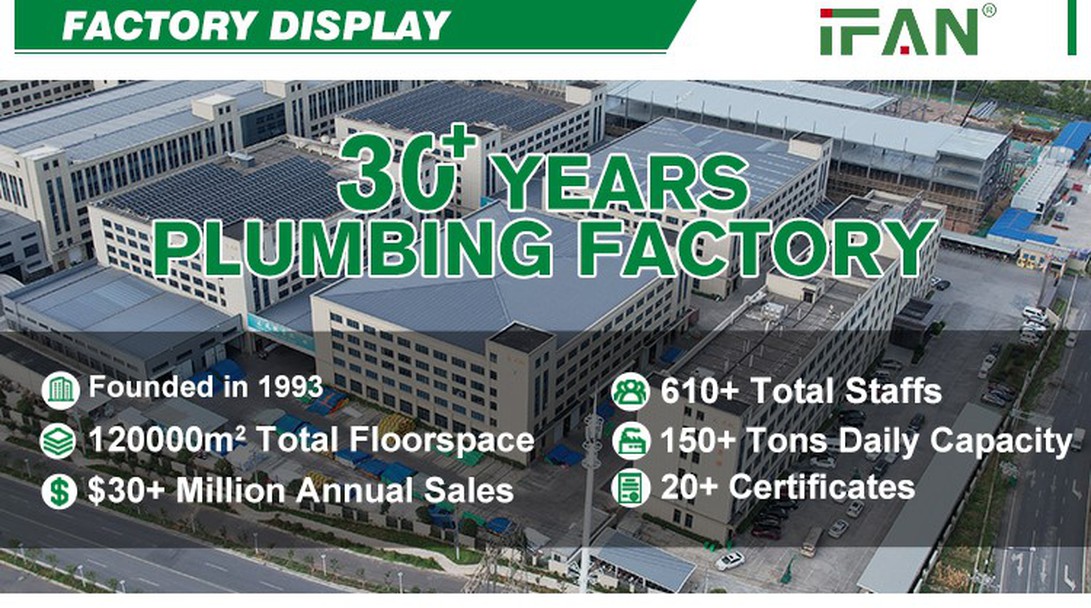
30+Years |
|
Contact Us |
Welcome to contact IFAN, we are online 24 hours a day to answer your questions!
Introduction to HDPE Pipe Fittings
HDPE (High-Density Polyethylene) pipe fittings are widely used in water supply systems, gas distribution networks, and industrial piping applications. These fittings are designed to connect HDPE pipes securely and ensure smooth fluid transportation under different operating conditions. One of the most common questions engineers and users ask is whether HDPE pipe fittings can withstand high water pressure. This is an important consideration because pressure resistance directly affects system safety, durability, and long-term performance. To understand their capability, it is necessary to examine the material properties, structural design, and real-world performance of HDPE fittings in pressurized environments.
Pressure Resistance of HDPE Material
HDPE is known for its excellent strength-to-density ratio, which allows it to perform well under high internal pressure. The pressure resistance of HDPE pipe fittings is closely related to the pipe's pressure rating, typically classified as PN (Pressure Nominal) values such as PN6, PN10, PN16, or higher. Depending on the grade and wall thickness, HDPE systems can handle pressures ranging from low to very high levels in water distribution networks. The material's molecular structure provides flexibility while maintaining strength, allowing it to distribute stress evenly. This makes HDPE suitable for continuous pressurized flow without sudden failure under normal operating conditions.
Fusion Joints and System Integrity
One of the key factors that allow HDPE pipe fittings to withstand high water pressure is their fusion-based jointing system. Unlike threaded or gasket-based connections, HDPE fittings are often joined using butt fusion or electrofusion methods. These techniques create a permanent, homogeneous bond between pipe and fitting, effectively turning the entire system into a single continuous structure. As a result, there are no weak mechanical joints that could fail under pressure. This significantly enhances system integrity and reduces the risk of leaks or bursts, even in high-pressure applications such as municipal water mains and industrial pipelines.
Flexibility and Stress Distribution
Another reason HDPE pipe fittings perform well under pressure is their flexibility. Unlike rigid materials such as steel or PVC, HDPE can slightly deform under stress without cracking. This flexibility allows the system to absorb pressure fluctuations, water hammer effects, and ground movement without structural damage. When internal pressure increases suddenly, HDPE pipes and fittings expand slightly and then return to their original shape, distributing stress evenly across the system. This characteristic greatly reduces the risk of localized failure points, making HDPE a reliable choice for dynamic pressure environments.
Long-Term Pressure Performance
HDPE pipe fittings are not only capable of handling high pressure in the short term but are also designed for long-term performance. Under normal operating conditions, HDPE systems can maintain pressure integrity for 50 years or more. This durability is based on extensive testing and standardized pressure rating systems used in engineering design. Over time, HDPE retains its mechanical strength without significant degradation from corrosion, scaling, or chemical exposure. This long-term stability is a major advantage over metal systems, which may weaken due to rust or internal erosion under sustained pressure.
Temperature Influence on Pressure Capacity
It is important to note that temperature has a direct impact on the pressure capacity of HDPE pipe fittings. As temperature increases, the allowable pressure rating of HDPE decreases slightly. However, within typical water supply temperature ranges, HDPE still maintains strong pressure resistance. Engineers take this into account by selecting appropriate pressure classes based on operating conditions. In cold water systems, HDPE performs exceptionally well under high pressure, while in warmer conditions, proper design adjustments ensure safe operation. This adaptability allows HDPE to be used in a wide range of environments without compromising safety.
Comparison with Other Pipe Materials
When compared to traditional materials such as steel, ductile iron, or PVC, HDPE pipe fittings offer a different approach to pressure handling. Steel can handle very high pressures but is prone to corrosion over time. PVC has good rigidity but is more brittle under impact or stress. HDPE, on the other hand, combines moderate-to-high pressure resistance with flexibility and corrosion immunity. While it may not always match the extreme pressure limits of heavy steel systems, it provides a more balanced performance with fewer long-term risks and maintenance requirements, especially in water distribution systems.
Real-World Applications Under Pressure
HDPE pipe fittings are widely used in real-world high-pressure applications, including municipal water supply systems, agricultural irrigation networks, and industrial fluid transport lines. In these environments, the systems often operate under continuous pressure for long periods. The proven performance of HDPE in such conditions demonstrates its reliability. Many modern infrastructure projects choose HDPE specifically because it reduces leakage risks and maintenance costs while maintaining stable pressure performance over decades of service.