
Why Choose HDPE Pipe Fittings Over Traditional Materials?
May 28, 2026

|
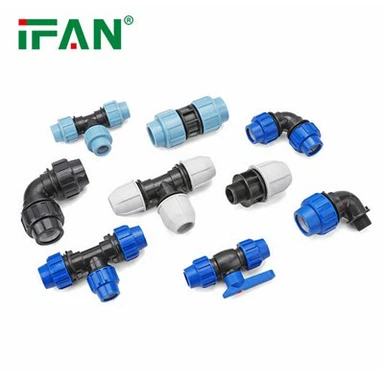
Product Name |
HDPE Pipe Fitting |
|
Color |
Blue Color |
|
Size |
20-110mm |
|
Brand |
IFAN or Customized |
|
OEM |
Support |
|
Sample |
Free |
|
Experience |
30+Years |
|
Contact Us |
Welcome to contact IFAN, we are online 24 hours a day to answer your questions!
Introduction to HDPE Pipe Fittings
HDPE (High-Density Polyethylene) pipe fittings have become a widely adopted solution in modern piping systems across water supply, gas distribution, industrial processing, and agricultural irrigation. These fittings are used to connect and control HDPE pipelines, ensuring safe and efficient fluid transportation. Traditionally, materials such as steel, ductile iron, copper, and PVC have been used in piping systems. However, increasing performance demands, maintenance concerns, and sustainability requirements have encouraged engineers to shift toward HDPE. Understanding why HDPE pipe fittings are often preferred over traditional materials requires examining their performance, cost efficiency, and long-term reliability.
Superior Corrosion Resistance
One of the most important reasons to choose HDPE pipe fittings over traditional materials is their excellent resistance to corrosion. Metal pipes, such as steel or iron, are highly vulnerable to rust and chemical degradation when exposed to moisture and environmental elements. Over time, corrosion can weaken pipe walls, reduce flow efficiency, and lead to costly leaks or system failures. HDPE, on the other hand, is chemically inert and does not rust or corrode. This makes it especially suitable for underground installations, water distribution systems, and chemically aggressive environments where traditional materials often struggle to maintain long-term performance.
Enhanced Flexibility and Impact Resistance
Unlike rigid traditional materials, HDPE pipe fittings offer remarkable flexibility and impact resistance. Steel and PVC pipes can crack or break under sudden impact, ground movement, or freezing conditions. HDPE, however, can absorb mechanical stress and deform slightly without failure. This flexibility makes it ideal for seismic zones, uneven terrain, and dynamic soil conditions. It also reduces the risk of damage during installation and transportation. In real-world applications, this resilience significantly improves system reliability and reduces unexpected repair costs associated with brittle material failure.
Leak-Free Jointing System
Traditional piping systems often rely on threaded, flanged, or gasketed joints, which can become weak points over time. These joints may loosen, degrade, or leak under pressure fluctuations. HDPE pipe fittings use heat fusion technology, including butt fusion and electrofusion, to create a permanent molecular bond between components. This results in a continuous, leak-free pipeline with no mechanical joints that can fail. The elimination of leakage not only improves system efficiency but also reduces water loss and environmental impact, making HDPE a superior option for critical infrastructure projects.
Long Service Life and Durability
HDPE pipe fittings are known for their long operational lifespan, often exceeding 50 years under proper conditions. Traditional materials like steel may require frequent maintenance due to corrosion, while PVC can become brittle over time under certain environmental conditions. HDPE maintains its structural integrity for decades without significant degradation. Its resistance to chemical exposure, abrasion, and environmental stress ensures consistent performance over time. This long service life reduces the need for replacements and contributes to lower lifecycle costs, making HDPE a more economical choice in the long run.
Lower Maintenance Requirements
Maintenance is a major cost factor in any piping system. Traditional materials often require regular inspections, protective coatings, or repairs to address corrosion, leaks, or wear. HDPE pipe fittings significantly reduce these maintenance demands. Because they do not corrode, scale, or easily degrade, HDPE systems remain stable with minimal intervention. This reduces downtime, lowers labor costs, and improves overall operational efficiency. For industries and municipalities managing large-scale infrastructure, the reduced maintenance burden of HDPE provides a significant economic advantage.
Improved Flow Efficiency and Energy Savings
The internal surface of HDPE pipe fittings is extremely smooth compared to traditional materials. This smoothness reduces friction loss during fluid transportation, allowing water or other media to flow more efficiently. In contrast, metal pipes often develop internal roughness due to corrosion or scaling, which increases resistance and energy consumption. By reducing friction, HDPE systems require less pumping power, leading to lower energy costs. Over time, this improved flow efficiency contributes to significant operational savings, especially in large distribution networks.
Environmental and Sustainability Benefits
Sustainability is becoming increasingly important in modern engineering decisions. HDPE pipe fittings offer several environmental advantages over traditional materials. Their long lifespan reduces material waste, and their lightweight nature lowers transportation emissions. Additionally, HDPE is recyclable under appropriate conditions, supporting circular economy practices. Reduced leakage also helps conserve water resources and prevent environmental contamination. Compared to energy-intensive materials like steel, HDPE provides a more environmentally responsible solution for infrastructure development.